
Illinois: Turning around or running in place?
Gov. Pat Quinn is claiming that Illinois is making a comeback. But the evidence, supported by public opinion, belies that fact. Illinois remains an economic basket case: The state has the fastest-shrinking workforce in the nation Illinois has the second-highest property taxes in the country, as well as a high tax burden on individual and business incomes Illinois is the third-most corrupt state in the country Illinois loses one resident...
Gov. Pat Quinn is claiming that Illinois is making a comeback. But the evidence, supported by public opinion, belies that fact.
Illinois remains an economic basket case:
- The state has the fastest-shrinking
workforce in the nation - Illinois has the second-highest property taxes in the country, as well as a high tax burden on individual and business incomes
- Illinois is the third-most corrupt state in the country
- Illinois loses one resident every 10 minutes to net out-migration
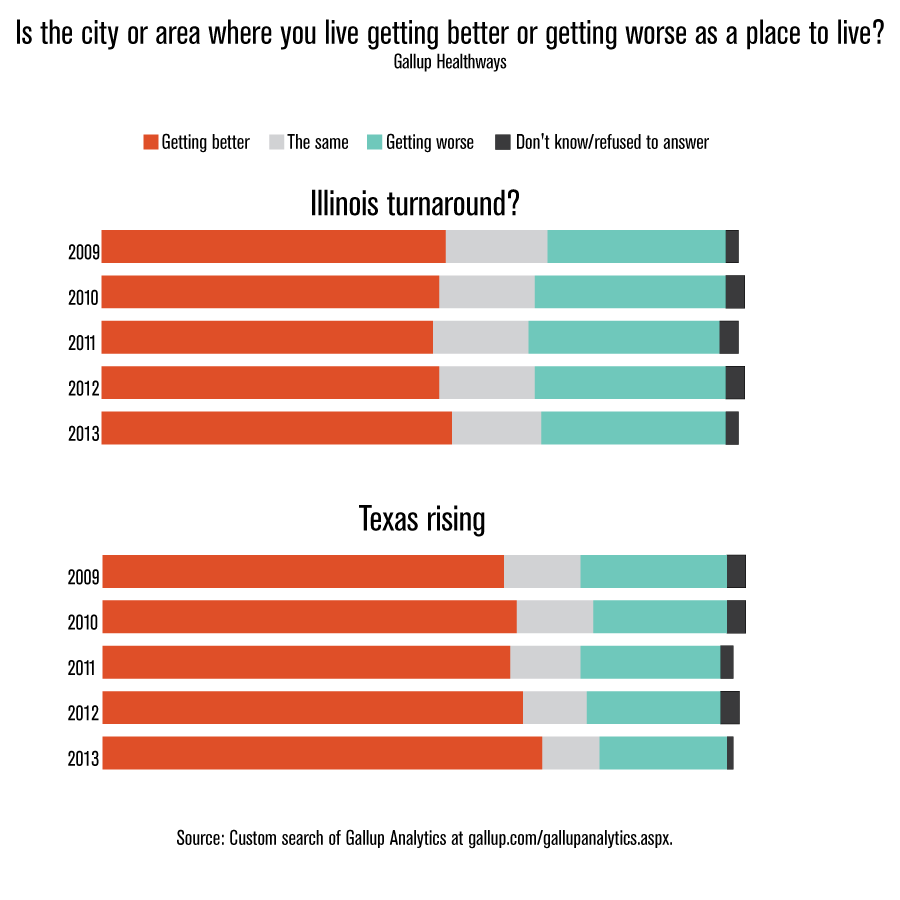
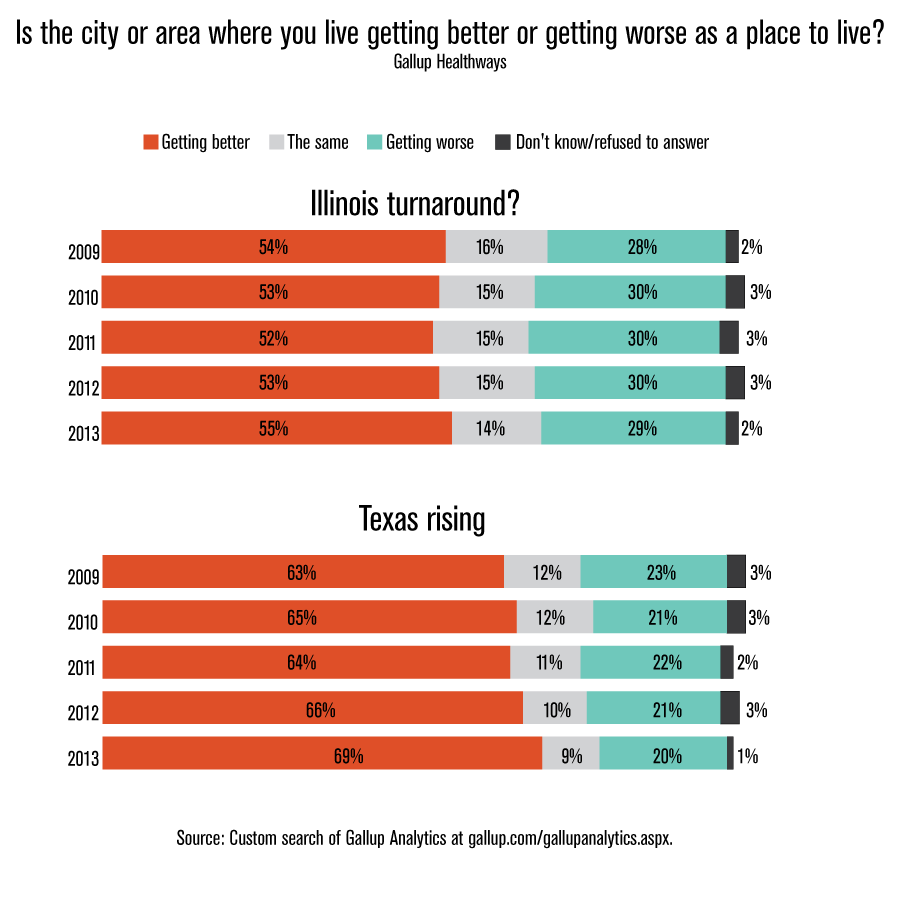
Among most social and economic indicators that track a state’s well-being, Illinois is often running in place or falling behind – and the citizenry knows it. Just 55 percent of Illinoisans believed the state was improving in 2013, according to Gallup Analytics.
In Texas, which has a booming economy and is gaining residents from Illinois, 69 percent believed that the state was getting better last year, which is up from 63 percent in 2009.
For every day that Illinois’ political leadership fails to reverse this destructive course, Illinois citizens are robbed of opportunity and, understandably, lose more hope in the state achieving its potential as a national economic powerhouse.
Illinois is not yet turning around. The Illinois Policy Institute continues to take a weekly glimpse into key social and economic indicators to show how Illinois is faring.
The stakes have never been higher for this state and the people of Illinois desperately need – and deserve – the promised turnaround. But that is not achieved by treating workers like ATM machines and serving a well-connected political class rather than citizens.