

Three things to know about the end of cash bail in Chicago three years later
Reforms could diminish the risk of new crimes committed on pretrial release.
Three years ago today, Illinois became the first state to entirely eliminate cash bail.
The measure was part of the larger crime bill known as the SAFE-T Act. For Chicago, the results of ending cash bail have been mixed.
Here are three things to know about the end of cash bail in Chicago:
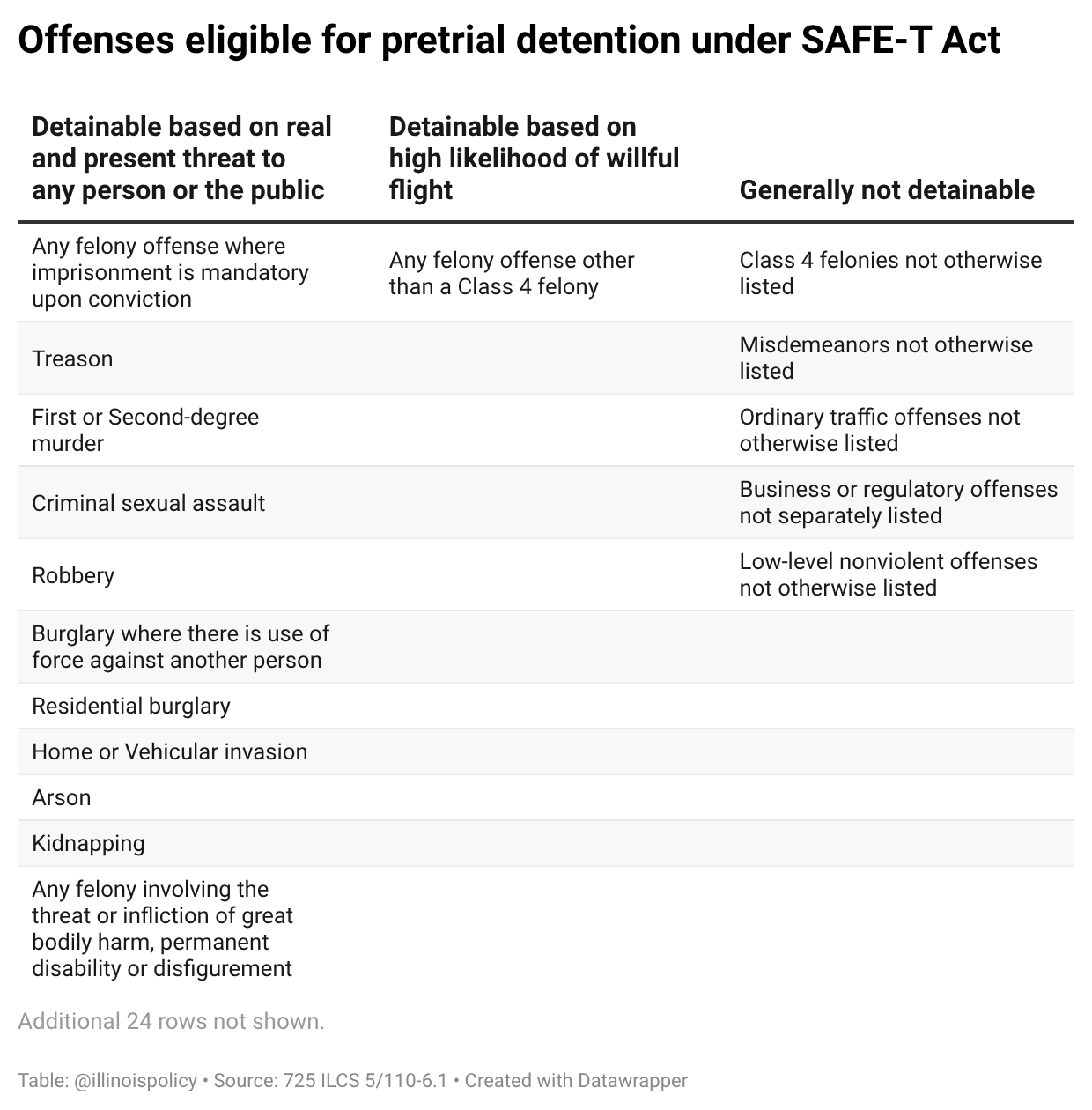
- Almost half of all defendants arrested in Cook County cannot be legally detained after their first court appearance.
- When comparing similar defendants, more were released, and more were charged while on release, after cash bail ended.
- Overall crime has dropped, but that is in line with national trends.
Reforms such as easing the process for prosecutors to file a petition seeking detention and allowing detention for repeat offenders or those deemed a threat to animals or property would mitigate the problems with the measure.
Why 50% of Cook County Arrestees Avoid Pretrial Detention
Cash bail was designed to ensure that defendants appear in court, not to protect public safety. A wealthy defendant may not think twice about paying bail even if he poses the same danger as one less well-off. For those who cannot pay, it becomes punishment for crime not yet proven. Reforms such as the SAFE-T Act are supposed to replace that system with one focused on protecting the public.
But those reforms have also restricted judges and prosecutors in several ways that hinder that overall goal: Many crimes are not detainable at all, and threats to animals or property cannot be considered in detention decisions.
Defendants in high-level felonies and violent crimes generally can be detained. But even after the law was amended to expand the types of crimes and circumstances allowing for pretrial detention, a whole swath of misdemeanors and low-level felonies do not allow for pretrial detention no matter how many times the defendant has been charged with the same crime.
For example, under the Pretrial Fairness Act, the Chicago “Kitten Killer” released earlier this year probably would have been ineligible for pretrial detention.
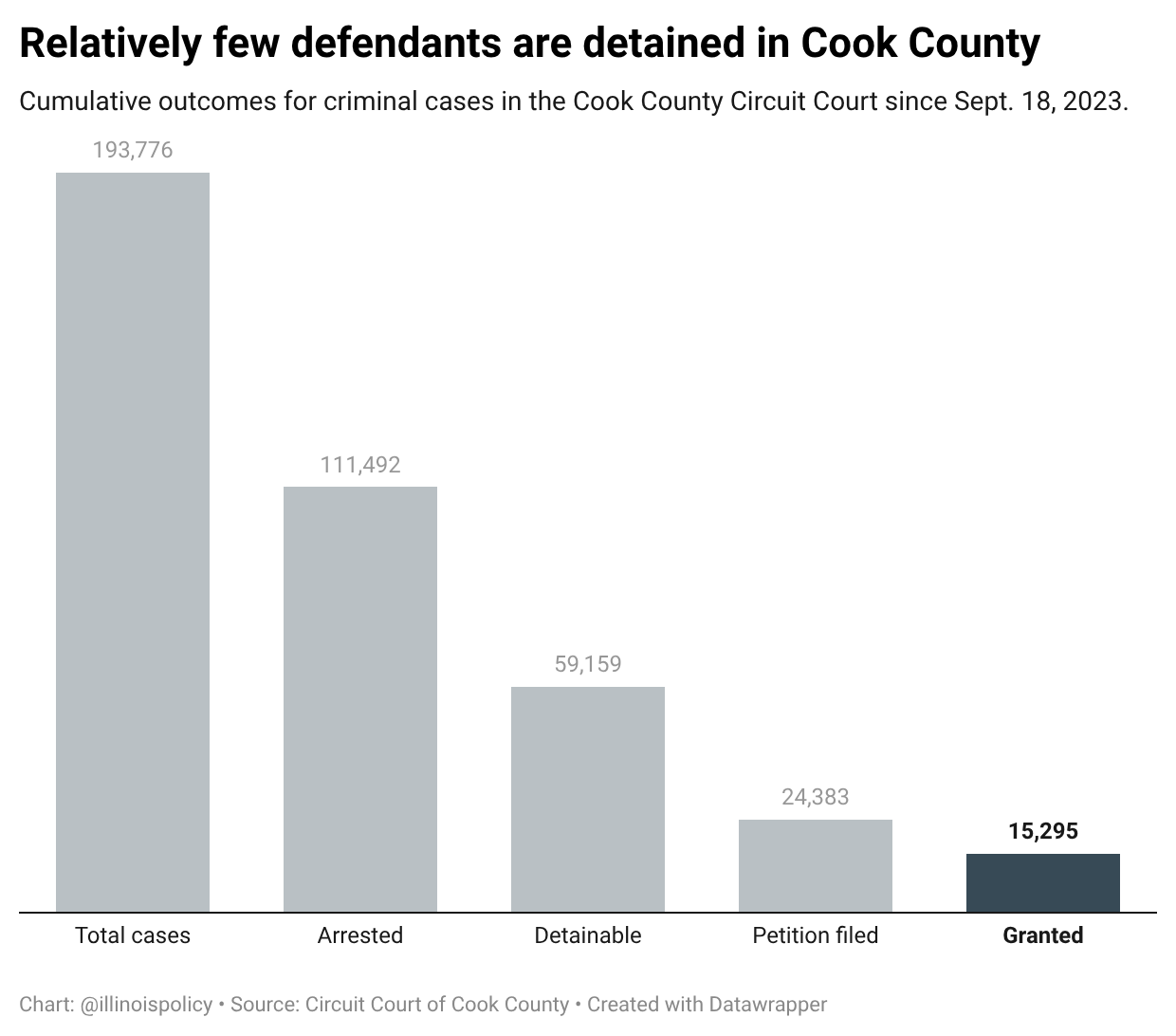
Of the nearly 111,500 defendants held for first appearance in Cook County since the Pretrial Fairness Act took effect, a little over 59,100, or 53%, were held for detainable crimes.
Even if a crime is detainable, prosecutors must file a petition to detain a defendant and prove by clear and convincing evidence that:
- The person committed a detainable offense.
- For most crimes, that the person is a real and present threat to a person or the community.
- For most crimes, that no condition or combination of conditions can mitigate that threat.
Prosecutors filed petitions for pretrial detention in less than half of eligible cases in Cook County. Judges granted those petitions in about 63% of cases. Of the almost 200,000 defendants since the Pretrial Fairness Act went into effect, a little over 15,000 received pretrial detention.
Are Defendants Committing New Crimes on Release?
As a matter of logic, releasing more defendants before trial increases the chances of crimes committed by those defendants on release. That is what appears to be happening in Cook County.
More defendants are being released after being held for first appearance in Cook County, and more have been charged with new crimes on release since the law took effect.
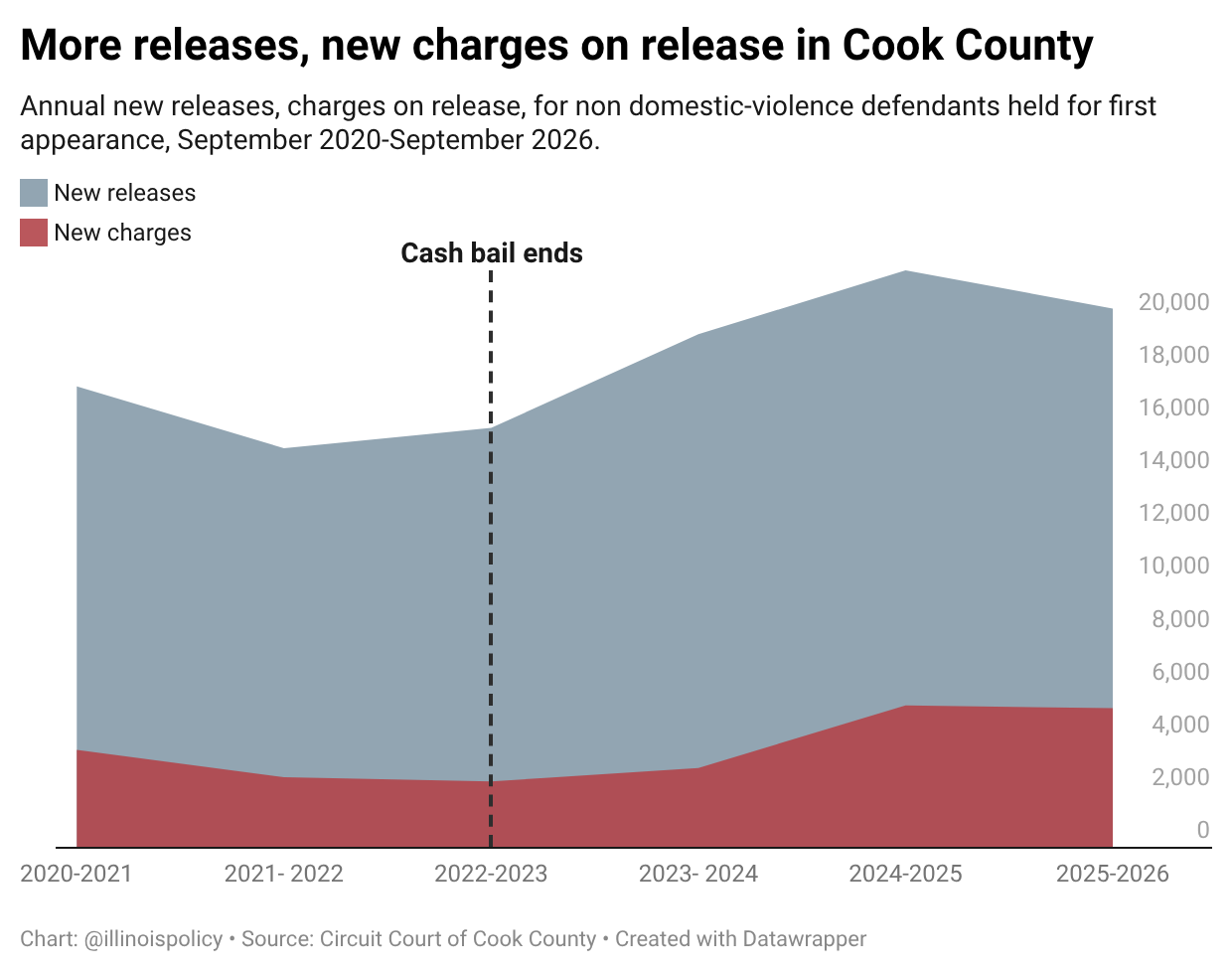
New pretrial releases for nondomestic violence defendants held for first appearance averaged a little over 16,000 in the three years from September 2020 to September 2023, before the law went into effect, as opposed to well over 20,000 for the three years after.
While new charges on pretrial release before the law took effect averaged a little under 3,000 a year in Cook County, the average in the three years after topped 4,500.
That is not to say that there is no upside. The average population of new defendants released who were not charged with a new crime went from a little under 13,200 to over 16,000. That’s an average of 2,800 defendants each year who would otherwise have been detained if they could not afford bail – a trend we should seek to preserve.
Chicago’s Crime Drop Follows National Trends, Not SAFE-T Act Reforms
Neither the low number of detentions nor the increase in charges for defendants on pretrial release prevented an overall drop in crime, but that drop was experienced nationwide.
Annual violent and property crime totals in Chicago dropped in both 2024 and 2025. But the same happened for other big cities with cash bail.
Los Angeles saw a similar drop over those two years, and New York saw similar drops in property crime and a modest drop in violent crime in 2025.
Nationwide, law enforcement agencies serving populations over 1 million also saw drops in violent and property crimes in the past two years.
While the end of cash bail did not prevent crime from dropping in Chicago, it did not spur the drop. Also, under the Pretrial Fairness Act, nearly half of those charged in Cook County could not be legally detained under the new law. That can be partially blamed for the increase in the number and proportion of defendants charged on pretrial release.
The answer to these problems is not to trade them for the problems of cash bail, but to give judges more flexibility in determining pretrial detention. Chronic repeat offenders should be eligible for pretrial detention, and judges should be able to consider threats to animals and property when considering detention. With such reforms, the justice system can continue to protect the rights of defendants but not be so restrained that it cannot deal with destructive or habitual offenders.