
Illinois public schools set record-high graduation rate, despite low math, reading scores
Yet 40% remain below grade level in reading and 60% in math.
Reading proficiency improved and the high school graduation rate hit a record in 2026 in Illinois public schools.
But the annual report card for the school year revealed several areas of concern:
- 2-in-5 students were not at grade level in reading.
- 3-in-5 students were not at grade level in math.
- The high school graduation rate reached a record high despite half of students below 11th-grade standards.
- Enrollment dropped for the 11th straight year.
- Chronic absenteeism remained higher than before the pandemic.
Over 2-in-5 were not at grade level in reading
Data released Oct. 30 by the Illinois State Board of Education shows troublesome results in the reading proficiency rates for third- through eighth-grade students on the Illinois Assessment of Readiness and 11th graders on the ACT.
- 56% were proficient in reading on the IAR for grades 3 through 8.
- 55% were proficient in reading on the ACT for 11th grade.
Reading proficiency increased by three percentage points in 2026 from the previous school year. That modest gain comes two years after the state released a comprehensive literacy plan offering guidance to schools on evidence-based reading instruction practices. More reform is needed to ensure school districts adopt evidence-based practices to further improve student literacy and academic achievement.
3-in-5 were not at grade level in math
Students showed similar struggles to meet grade-level standards in math:
- 40% were proficient in math on the IAR for grades 3 through 8.
- 39% were proficient in math on the ACT for 11th grade.
The 2025 report card showed a large increase in proficiency in both reading and math, but that’s after the state lowered the scores needed to be considered “proficient” in those subjects starting in 2025.
Lowering the standards meant parents were unable to compare 2025 proficiency rates in their schools or districts to previous years, and many students were reported as “proficient” but were still struggling.
The graduation rate reached a record high despite half of students below grade-level standards
The four-year high school graduation rate hit a record-high 89.8% for the class of 2026, but that doesn’t mean those students are prepared for life after high school.
The most recent state assessment data available for this record-breaking 2026 graduating class is the ACT, which students took during their junior year. Even with the lowered proficiency standards, only 52% met grade-level standards in reading and 39% in math.
Illinois may be graduating nearly 90% of its high school students, but with little more than half of the class of 2026 proficient in reading and math on their junior-year ACT, a diploma does not necessarily signal academic readiness.
Enrollment dropped for the 11th straight year
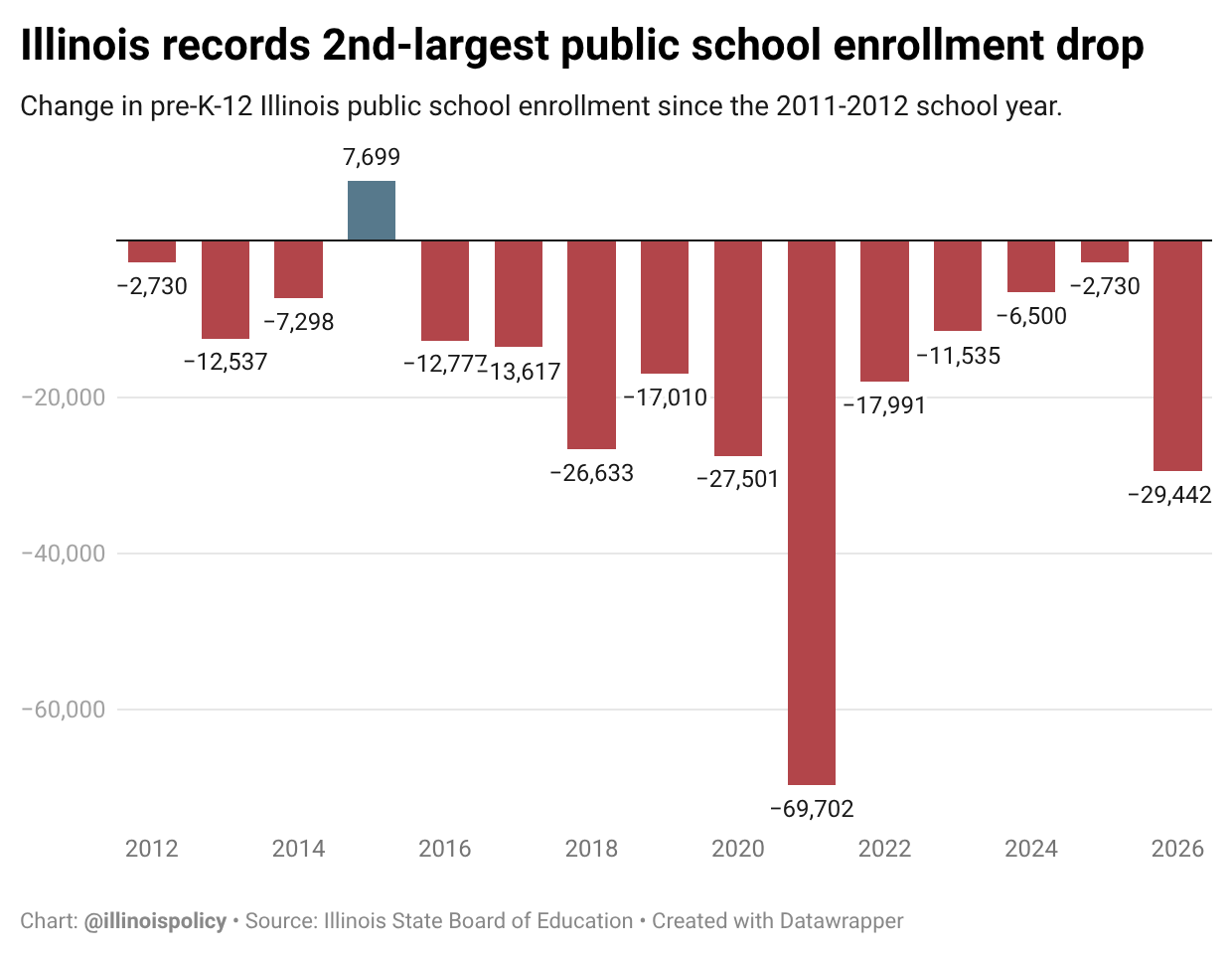
Illinois public school enrollment dropped by over 29,000 students last school year, with about 1.82 million enrolled in preschool through 12th grade.
That was the second-largest drop in enrollment in the past 15 years. During that time, enrollment increased just once.
Student absenteeism remains higher than before the pandemic
The absenteeism rate improved in 2026 but still remains higher than it was before the COVID-19 pandemic.
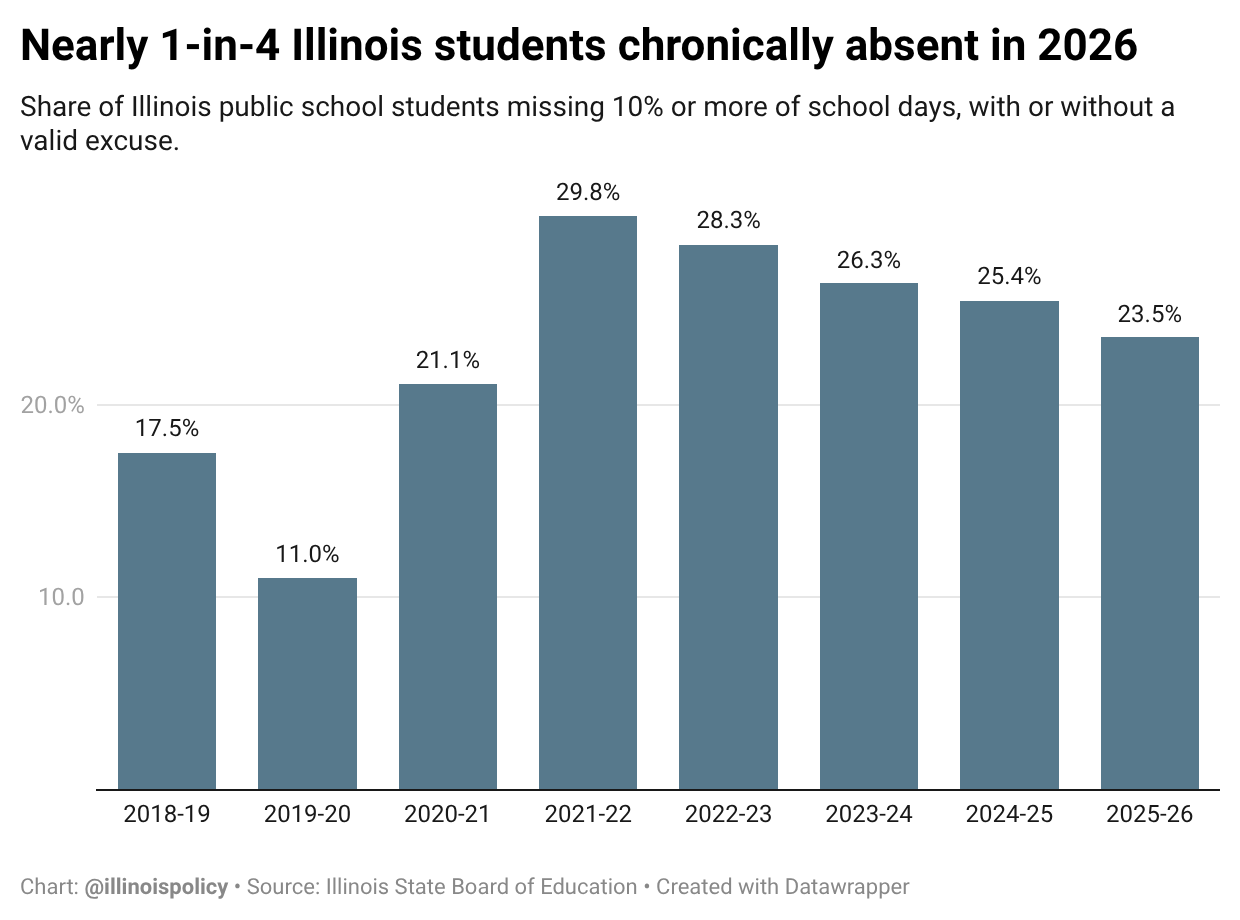
Nearly 1-in-4 Illinois public school students were chronically absent in the 2025-2026 school year, meaning they missed 10% or more of the school year with or without an excused absence.
In 2019, the final full school year before schools were closed to in-person learning because of the COVID-19 pandemic, 17.5% of Illinois students were chronically absent. That number peaked at 29.8% in 2022 before gradually decreasing the next four school years.
Despite four years of declines, the absenteeism rate remains nearly six percentage points higher than the 2019 rate.
High absenteeism is a warning sign, as research suggests frequent absences from school put students at a higher risk of poor outcomes, such as dropping out and lower academic achievement.
Illinois should pursue rigor and transparency in public schools
Illinois students deserve an education that prepares them to succeed through graduation and beyond. Rather than celebrate higher graduation rates and proficiency under lowered standards, Illinois must pursue reforms that ensure students are truly prepared for success beyond the classroom.
One way to focus on improving actual student achievement is by requiring schools to adopt evidence-based literacy practices, to identify and intervene early when students fall behind, and to ensure parents have transparent information about their children’s academic progress.
Research shows that students who fall behind in reading skills, especially in lower elementary grade levels, drop out at much higher rates than their classmates. Focusing on improving literacy is a strong first step that will help students throughout their academic careers.