Illinois SNAP enrollment falls to another 13-year low
But the state’s error rate is fifth-highest in the country, which could bring costly penalties.
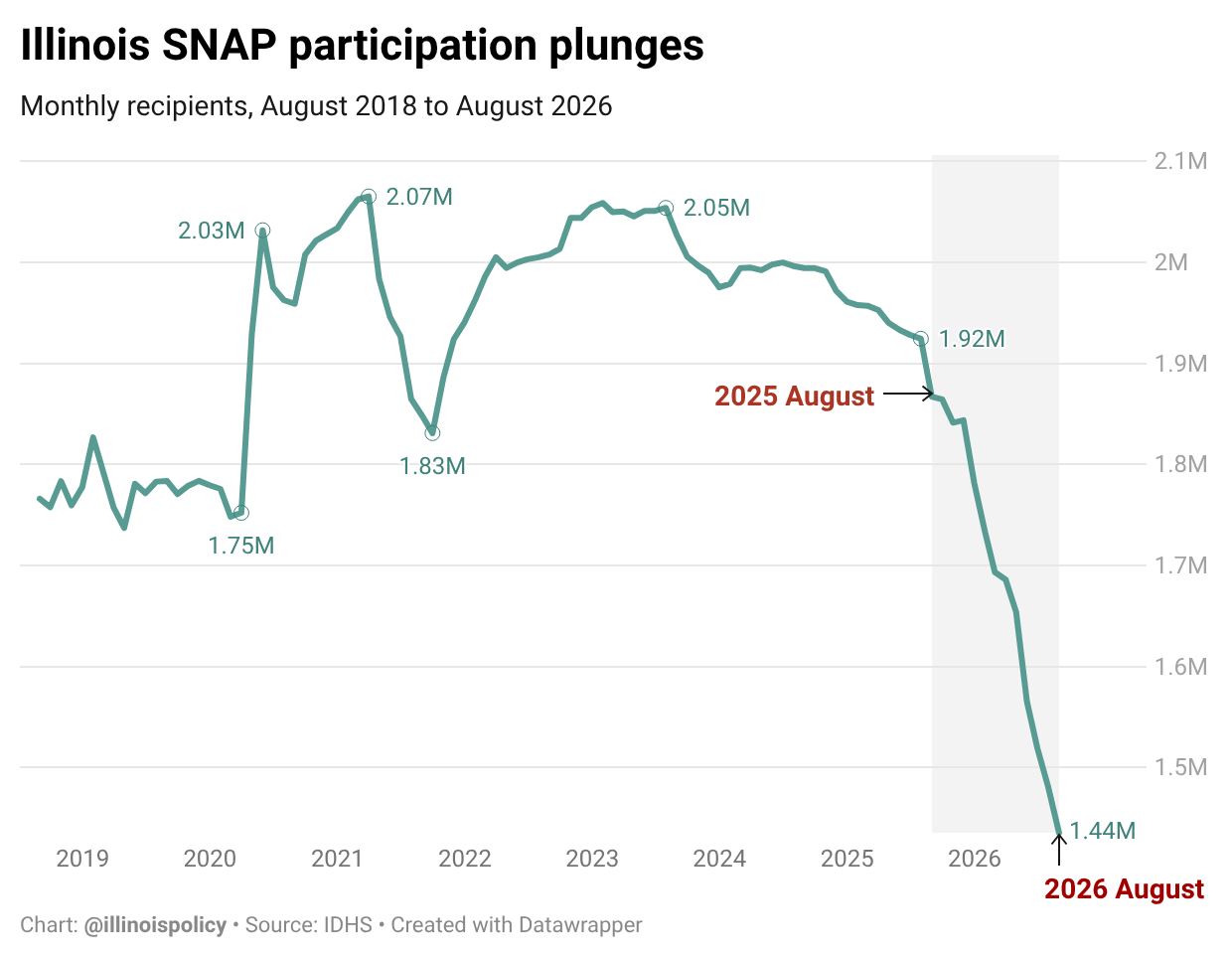
Food stamp enrollment in Illinois fell to a 13-year low in August.
Just over 1.4 million state residents received Supplemental Nutrition Assistance Program (SNAP) benefits in August, down more than 23% from August 2025 and the lowest in state records dating to 2013.
August was the ninth straight month enrollment has fallen in Illinois.
The sharpest of those recent declines followed benefit losses beginning May 1 under expanded federal work requirements. Enrollment in the state fell 13.2% from April to August.
To address lost benefits, Illinois is spending $70 million on FRESH, which began Aug. 1 and provides a one-time $400 payment per eligible person whose benefits ended or declined under the work rules. FRESH does not restore SNAP eligibility.
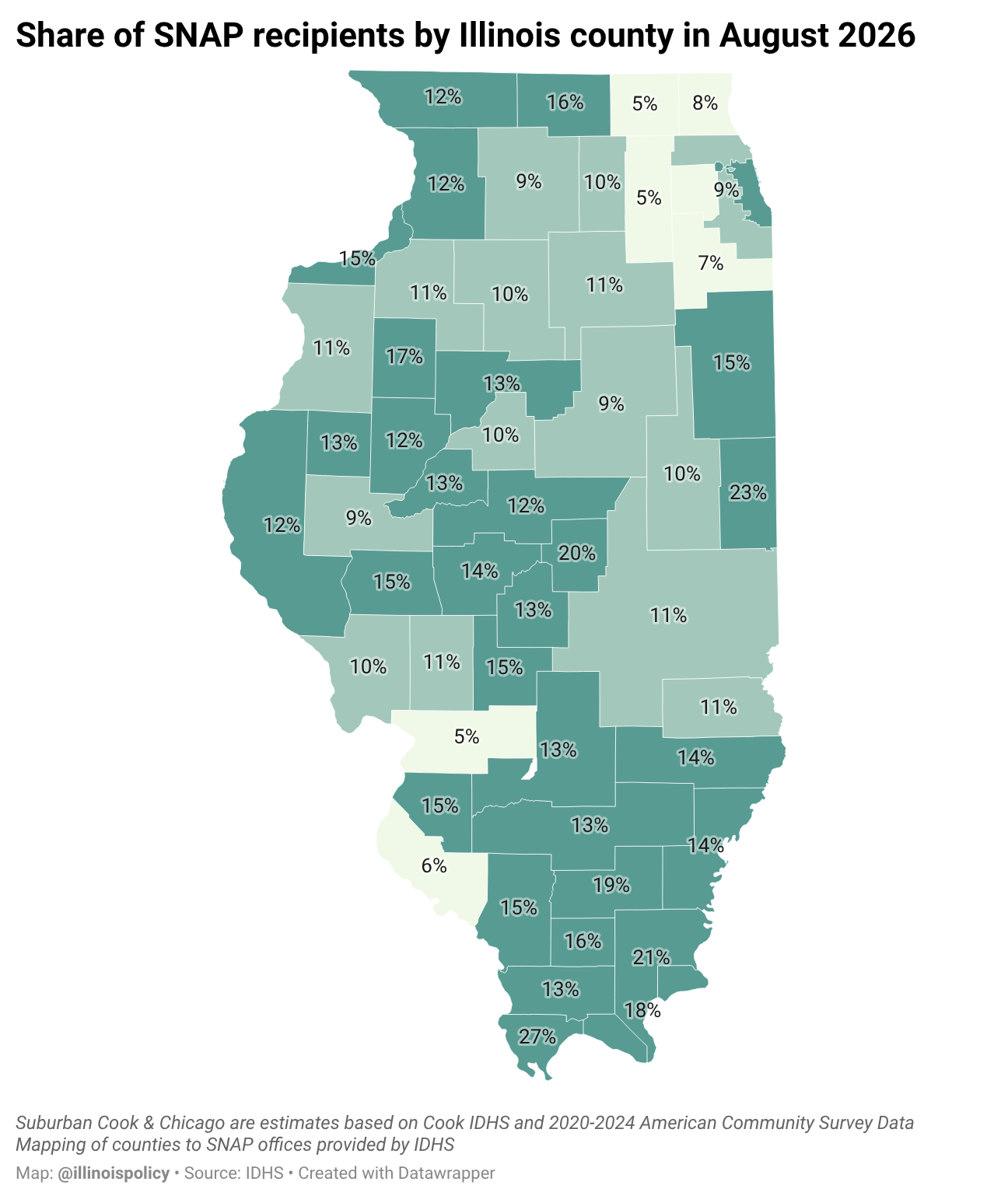
Roughly 1-in-9 Illinois residents get SNAP benefits. Chicago accounted for about 31% of recipients, with 16% of its population enrolled.
The highest rate, approaching 27%, was in the Alexander-Pulaski area at the southern tip of the state.
The Kane-Kendall area and McHenry County had the lowest participation rates, at 4.6% and 5%. Some counties are combined in the totals.
Falling enrollment does not eliminate taxpayer exposure. Illinois’ payment error rate reached 14.67% in fiscal 2025, significantly higher than all its bordering states and fifth-highest among the 50 states.
The error rate measures overpayments and underpayments, not fraud; overpayments accounted for more than 90% of Illinois rate.
Failing to improve the error rate could cost Illinois hundreds of millions of dollars. Federal SNAP changes mean that if Illinois doesn’t improve, the state could be required to cover 15% of benefit costs, or over $500 million a year, depending on enrollment. Illinois qualifies for a delay in that penalty until October 2028.
Also, as of Oct. 1, states must cover 75% of ordinary SNAP administrative costs, up from 50%. Illinois budgeted more than $100 million for SNAP administration for fiscal 2027, vs. $60 million previously.
Illinois can learn from its better-performing neighbors. Accurate administration protects taxpayers while preserving assistance for eligible families.