Over half of Chicago students below grade level in math, reading
Most CPS students struggle with math and reading. Nearly 2-in-5 were chronically absent.
Despite modest year-over-year improvements in proficiency, most Chicago students are still struggling to meet grade-level standards in reading and math.
Just 46% of Chicago Public Schools students in third through eighth grade could read at grade level in the 2025-2026 school year, according to the Illinois Report Card released Oct. 30. Only 29% could perform math proficiently.
Among 11th-graders, just 44% were proficient in reading and 28% in math on the ACT.
The new data reveal several areas of concern:
- Fewer than half of students read at grade level.
- Only 3-in-10 met grade-level standards in math.
- 83% of CPS high school students graduated within four years, despite low academic proficiency.
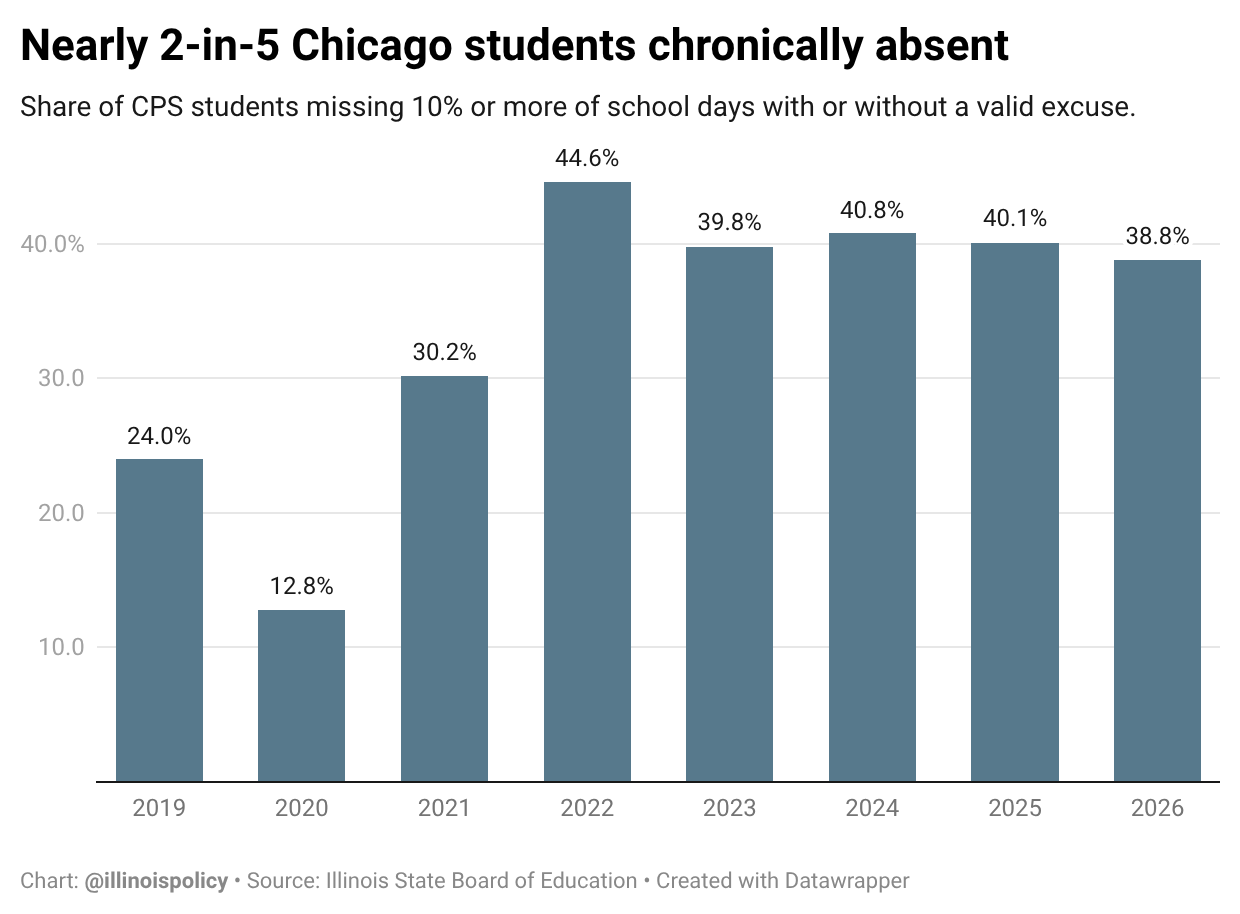
- Chronic absenteeism remained high, at nearly 2-in-5 students.
Despite slight improvements in proficiency compared with the previous year, Chicago students’ continued struggles to meet academic standards should concern parents and school leaders.
Fewer than half of students read at grade level
Chicago students made modest gains in reading proficiency in 2026, but most still failed to meet grade-level standards.
The latest results show:
- 45.7% of third- through eighth-graders were proficient in reading on the Illinois Assessment of Readiness.
- 43.9% of 11th-graders were proficient in reading on the ACT.
Reading proficiency increased by 2.9 percentage points on the IAR and 3.8 percentage points on the ACT in 2026 compared with the previous school year.
These results come after the Illinois State Board of Education in 2025 lowered the scores needed to be considered proficient on state assessments in both reading and math.
The changes made it easier for students to meet proficiency standards, meaning more students could be classified as proficient without demonstrating the same level of achievement required before the changes.
The adjustments also made it harder for parents and the community to compare their schools’ performance with earlier years and understand how their students are doing.
While Chicago students made progress in reading, more must be done to ensure students receive effective literacy instruction and meet academic standards.
Only 3-in-10 students met grade-level standards in math
Chicago students showed even greater struggles in math, with fewer than 3-in-10 meeting grade-level standards despite the lowered proficiency standards.
The latest report card shows:
- 29% of third- through eighth-graders were proficient in math on the IAR.
- 28.1% of 11th-graders were proficient in math on the ACT.
Math proficiency improved by 1.7 percentage points on the IAR and 2.8 percentage points on the ACT compared to the previous year.
83% of students graduated from high school within four years, despite low academic proficiency
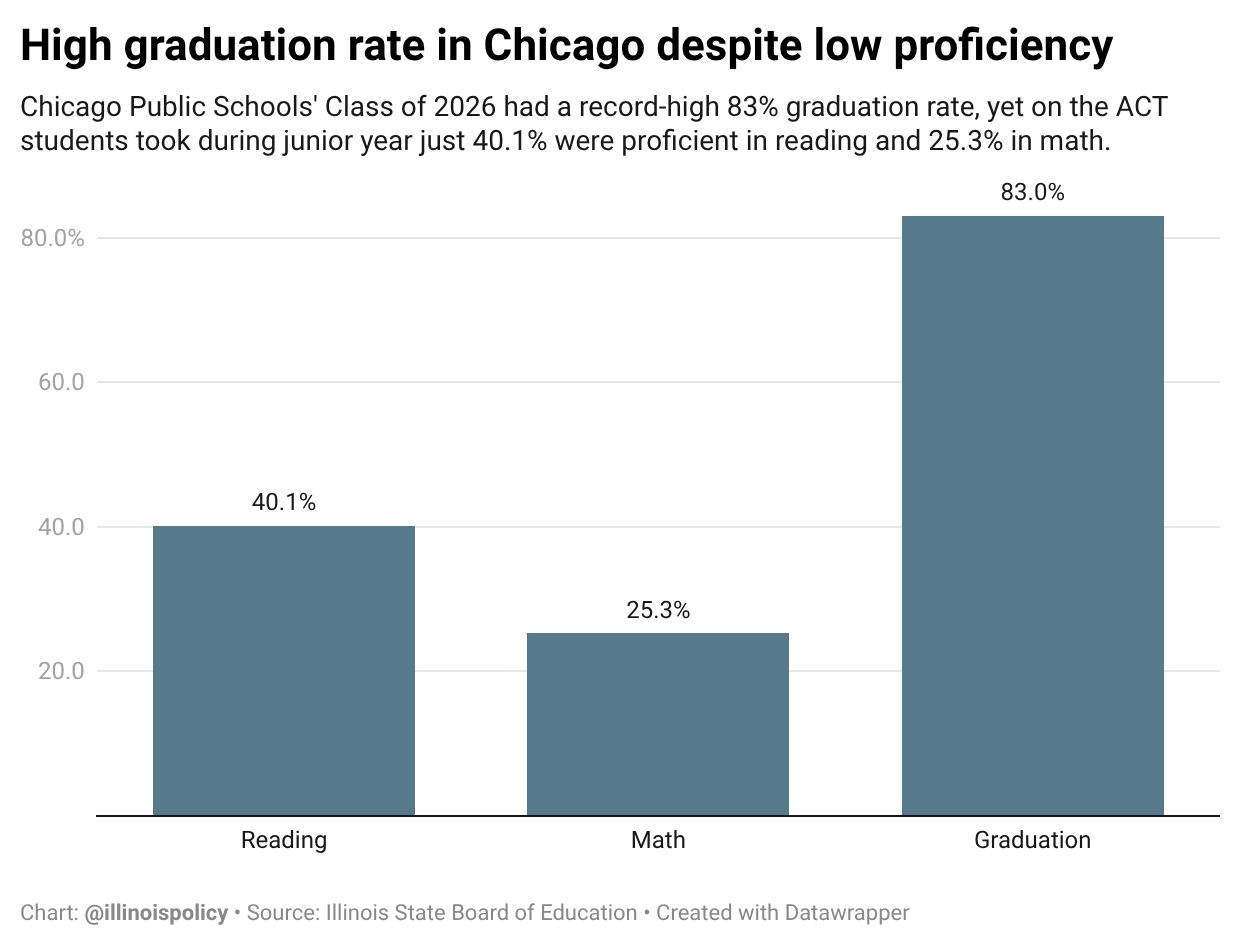
CPS graduated 83% of high school students within four years in 2026. But the high graduation rate does not necessarily mean students are prepared for life after school.
The graduating class of 2026 took the ACT in spring 2025 during its junior year. Just 40.1% of CPS 11th-graders were proficient in reading and 25.3% in math.
That means fewer than half of students tested demonstrated grade-level reading skills and only about one-quarter met math proficiency standards during their junior year.
Yet more than 8-in-10 graduated within four years.
While graduation rates are an important measure of school success, they do not necessarily reflect whether students have mastered the academic skills needed for college or careers. In fact, a 2023 study by the University of Chicago Consortium on School Research found that just 30% of CPS graduates get their bachelor’s degrees in four years, compared with 47% nationally.
Chicago students deserve more than a diploma. They deserve an education that prepares them to succeed beyond high school.
Nearly 2-in-5 Chicago students were chronically absent
Chronic absenteeism remains high in CPS, with 38.8% of students missing at least 10% of the 2025-2026 school year, with or without an excuse.
The rate declined from 40.1% in 2025 but remains significantly higher than before the COVID-19 pandemic.
High absenteeism is a warning sign for students, as research suggests frequently missing school puts students at greater risk of poor academic outcomes, including falling behind in learning and dropping out of school.
Chicago students need stronger academic outcomes
The latest report card shows modest improvements at CPS, but the statistics remain troubling: Most Chicago students could not read or do math proficiently last school year, and nearly 40% were chronically absent.
More must be done to ensure every Chicago student receives a quality education that prepares them to succeed in school and beyond.
Chicago school leaders should focus on improving student achievement through evidence-based literacy instruction, early intervention for struggling students and greater transparency for parents.
Improving academic achievement should be the measure of success for Chicago Public Schools, not simply increasing graduation rates or reported proficiency under lowered standards.