Illinois Senate Republicans rebut Madigan’s ‘free lunch’ claim
In response to Illinois House Speaker Michael Madigan’s claims that downstate school districts are getting a “free lunch” when it comes to teachers’ pensions, Illinois Senate Republicans released a newreport Tuesday outlining the disproportionate share of education funding Chicago receives. Here’s its main point: The net result of [school funding in Illinois] is a significant budget...
In response to Illinois House Speaker Michael Madigan’s claims that downstate school districts are getting a “free lunch” when it comes to teachers’ pensions, Illinois Senate Republicans released a newreport Tuesday outlining the disproportionate share of education funding Chicago receives. Here’s its main point:
The net result of [school funding in Illinois] is a significant budget disparity that treats Illinois’ schoolchildren differently simply based on where they happen to live. A preschool child in a downstate district will receive fewer education service dollars from the state than the child would in Chicago. A developmentally disabled child living in a suburban community will receive less funding for his education from the state than would a similar child in Chicago.
Perhaps most unfair of all, an impoverished child in Edwardsville must be educated for barely 15 percent of the state support available to a needy child in Chicago living under comparable economic circumstances.
According to their analysis, when you add up all of the component parts of state education funding, including the General State Aid for Education budget, the Corporate Personal Property Replacement Grant, special education grants and early childhood education grants, Chicago receives $2,223 in “free lunch” per student while downstate students only receives $67 per student.
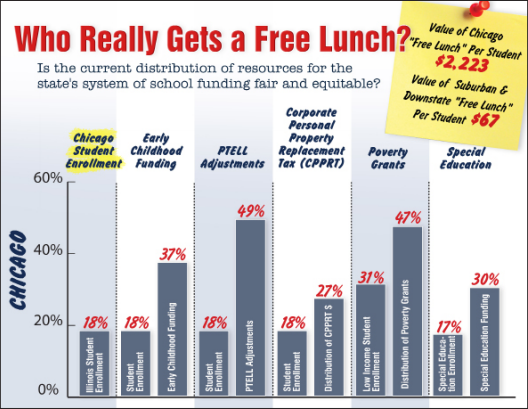
This report raises important questions about how the state distributes its education dollars. Its call for greater transparency is welcome, given that only a limited number of people in Illinois truly know where the money goes.
But, it’s wrong in claiming that “the Foundation Grant was the worst formula for education funding, except for every other formula that had ever been tried.”
This simply isn’t true. Illinois could institute reforms that allow the money to follow students, not flow to districts. Doing so would empower parents, encourage competition, spur innovation, promote efficiency and boost student outcomes – all changes that would benefit the education system immensely.