
U.S. recovers, Illinois lags
U.S. nonfarm payrolls added 142,000 jobs in August, against consensus expectations of 230,000, according to the Bureau of Labor Statistics. August marked the worst month of job creation in 2014. Average monthly job creation so far this year is 215,000. The national unemployment rate ticked down to 6.1 percent, because only 16,000 unemployed Americans found...
U.S. nonfarm payrolls added 142,000 jobs in August, against consensus expectations of 230,000, according to the Bureau of Labor Statistics. August marked the worst month of job creation in 2014. Average monthly job creation so far this year is 215,000.
The national unemployment rate ticked down to 6.1 percent, because only 16,000 unemployed Americans found work, while 64,000 unemployed Americans dropped out of the workforce.
The national recovery from the Great Recession has been weak, and August showed signs of a possible slowdown. However, the U.S. as a whole has vastly outperformed Illinois.
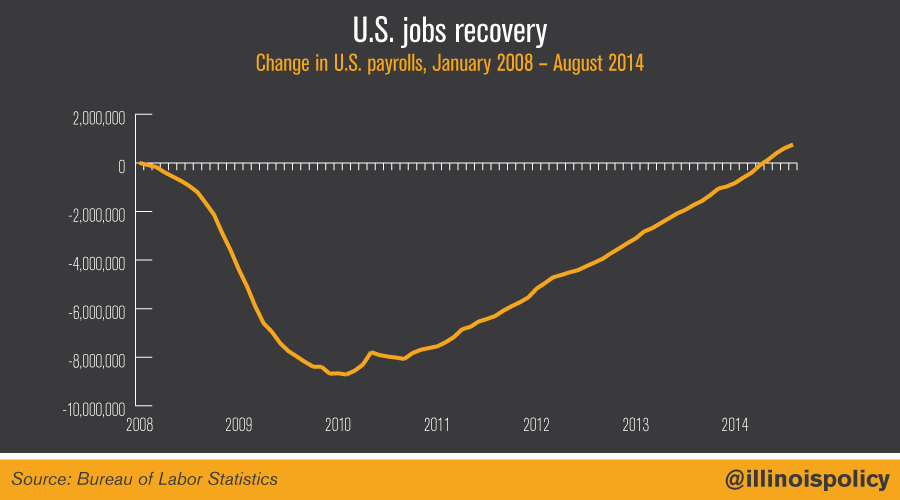
For the U.S. as a whole, the jobs lost during the recession have been regained, according BLS’s business establishment survey. The U.S. has 750,000 more jobs than in January 2008, the pre-recession peak.
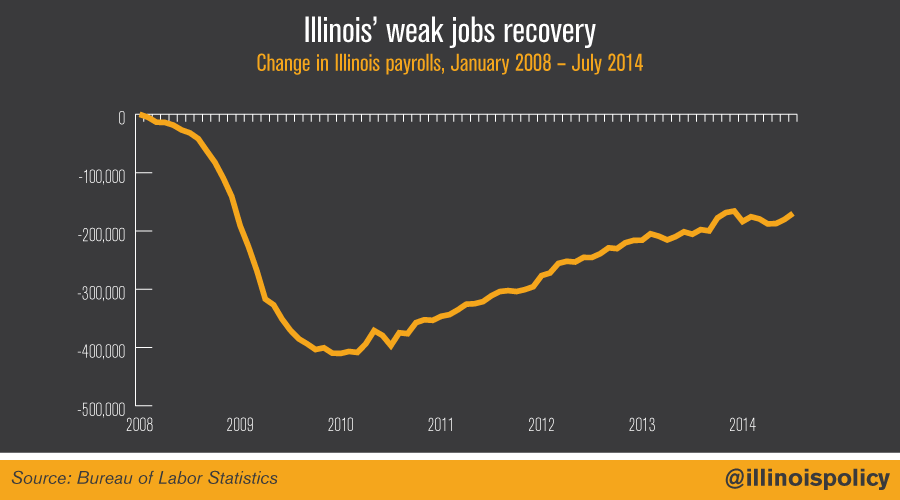
Illinois is far from recovery, however. The Prairie State is still down 170,000 jobs, the biggest jobs gap in the entire country. At the current pace of job creation, Illinois is still several years away from a full recovery.
The BLS household survey, which measures the number of people employed nationwide, shows a similar comparison. There are 10,000 fewer people employed in the U.S. than when the Great Recession began. In one month, the U.S. will likely have the same number of people working as before the recession began.

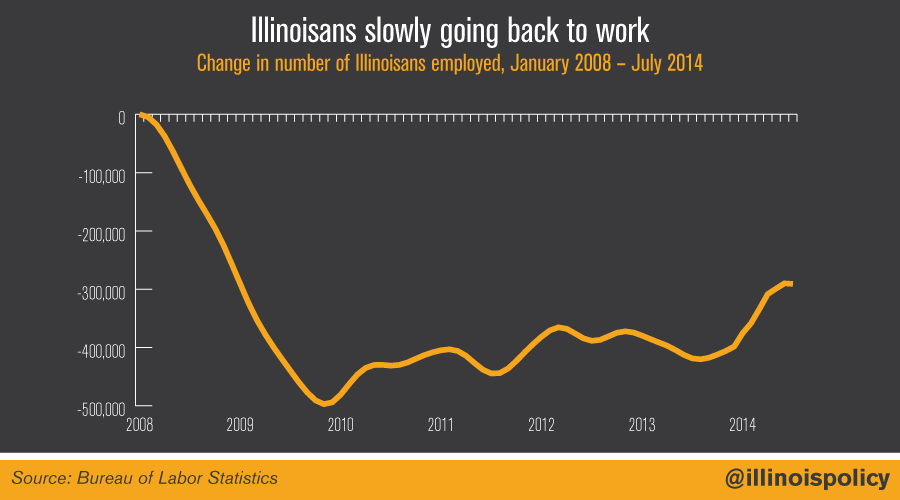
Illinois is furthest from recovery in terms of putting people back to work. There are 290,000 fewer people working in Illinois than before the recession began, a stunning loss of opportunity and the biggest employment gap in the entire country.
Illinois has several years to go before the number of people working in the Land of Lincoln matches the count of January 2008, more than six years ago.
Despite the U.S. enduring a painfully slow recovery, Illinois has had it magnitudes worse. In fact, right when the U.S. cut payroll taxes to stimulate the economy, Illinois raised its income tax, dealing itself a devastating blow on the road to recovery.
Illinois clearly needs to catch up with the rest of the country. The first step for doing that is to sunset the 2011 income tax hike as legally scheduled, and then work toward creating a state that fosters entrepreneurship.
