
Other states will take Illinoisans’ money if Pritzker doesn’t opt into federal scholarship program
An Illinois neighbor is vying for donations from state residents.
A new local billboard is garnering media attention by advertising that Illinois taxpayers can get a federal income tax credit for donating money to students out of state.
The billboard, in south suburban Chicago near the Indiana border, refers to the Federal Scholarship Tax Credit, also known as the Education Freedom Tax Credit. The program offers taxpayers a dollar-for-dollar income tax credit for donations of up to $1,700 per year to qualified scholarship-granting organizations.
Any taxpayer in any state can claim the credit starting in 2027. But only students in states whose governor has opted into the program can benefit from the donated education money.
Gov. J.B. Pritzker has not opted Illinois in. Four of Illinois’ neighbors have, including Indiana, where the billboard is advertising Illinoisans to donate scholarship money.
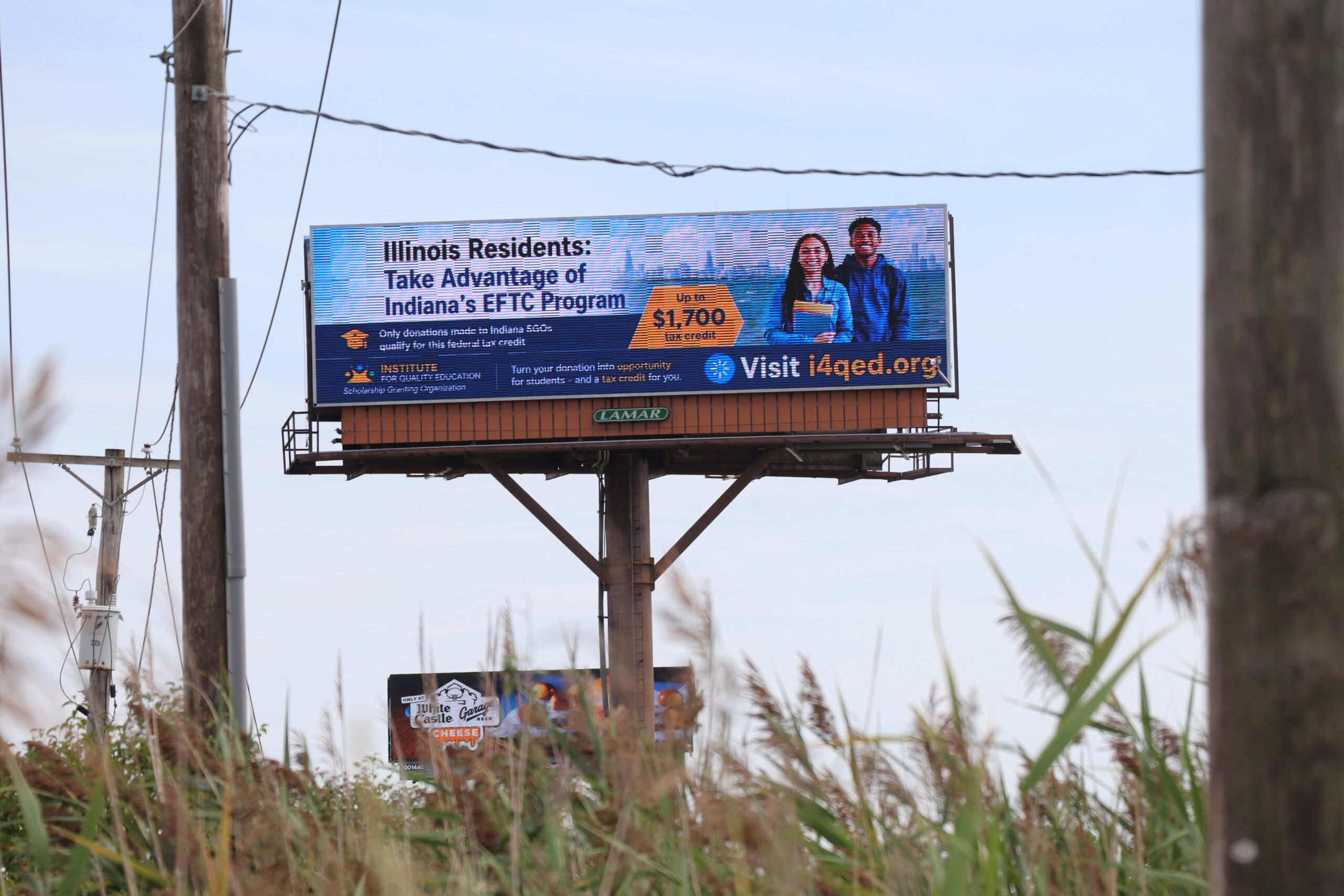
The billboard is correct:
- If Pritzker opts Illinois in: Donated money flows to eligible Illinois students.
- If Pritzker does not opt Illinois in: Illinois donors can still claim the federal tax credit by contributing to qualifying scholarship-granting organizations in participating states such as Indiana, but Illinois students cannot receive any of the donated money.
Students receive donated money to use on a variety of educational needs
Starting in 2027, students in public or private schools can access donor money from the program for a variety of educational services. Families must have an income of 300% or less of their area gross median income for their children to be eligible for the donated money.
The program allows students to use the money for a variety of expenses, including:
- Tuition
- Fees
- Tutoring
- Services for students with special needs
- Books, supplies or other equipment
- Extended-day programs
- Computer technology, equipment or internet access
- Uniforms, transportation or room and board
The program benefits public and private school students
Students in public or private schools can use the scholarship money.
That means public school students who might be struggling in certain areas or who need extra help or materials won’t have to leave their local public schools to find the support or opportunities they need. Or their families could get tuition assistance to help send them to a private school if that better fits their needs.
The most recent state test scores for Illinois show only half of students were reading at grade level in spring 2025. Just 39% were proficient in math.
Illinois students are struggling. The scholarship program offers families a way to provide the academic support their children need, whether at their local public school or at a private school.
The program takes no money from public schools
The program will not divert federal or state money from public schools to fund the scholarships.
Instead, the scholarships are donated by taxpayers, who will get a dollar-for-dollar federal tax credit. That credit will matter little to a billionaire but can benefit middle-income givers. Any taxpayer can receive the federal tax credit for a qualified contribution.
The only cost to the federal government is minimal foregone income tax revenue. There is no cost to states, only the benefit of more help flowing directly to students.
Most states have already indicated they will opt into the program
So far, 31 states have indicated they will opt in, including six controlled by Democrats.
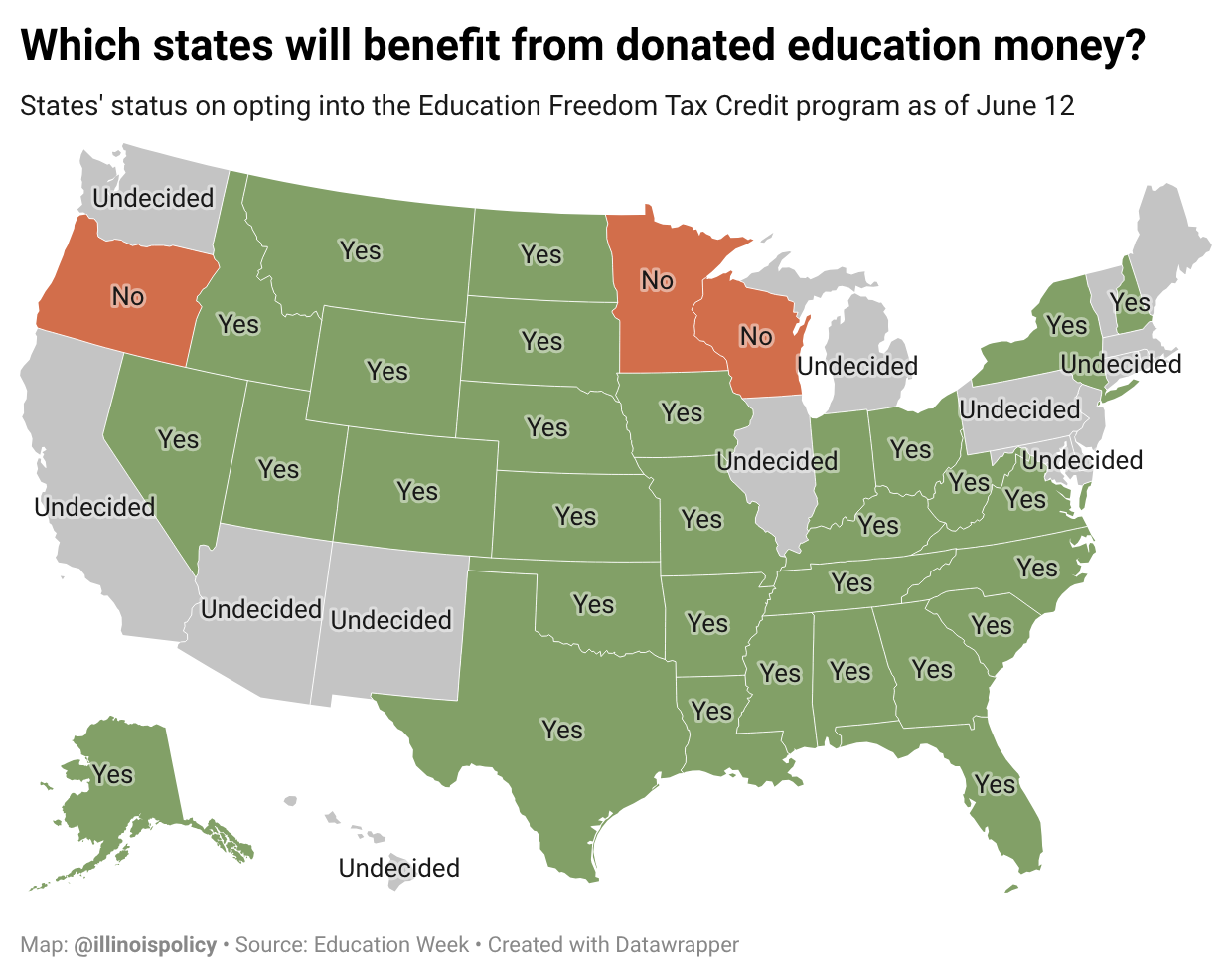
Pritzker must decide by Jan. 1 whether to opt Illinois into the program.
If he does not opt in, Illinois students will not get money donated by Illinoisans — students in other states will.