
Evanston proposes property tax hike, higher fees
Residents would face a host of increased costs under the city’s proposed 2027 budget.
Evanston residents could face increases in property taxes and other costs next year.
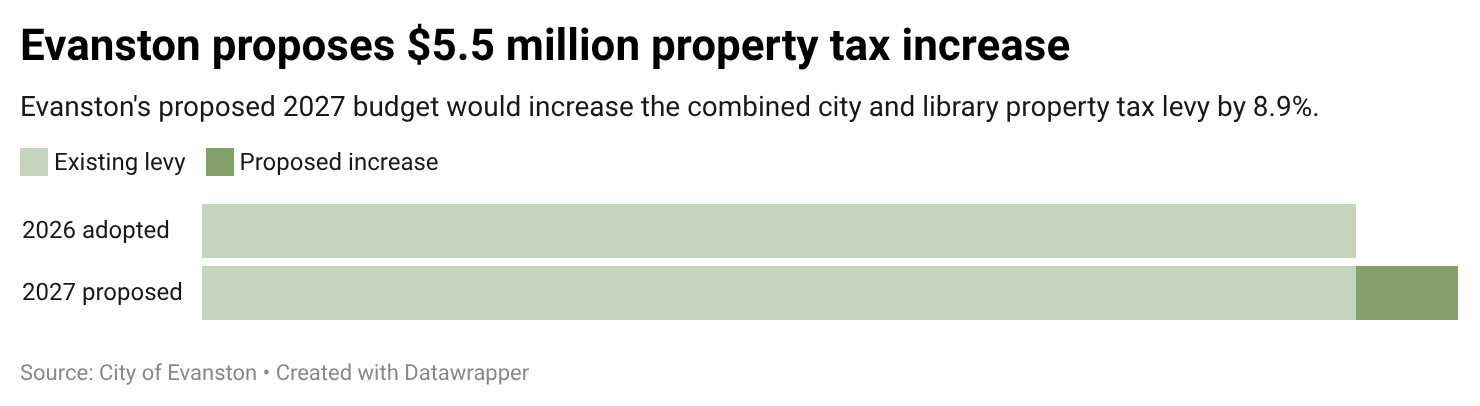
The city’s proposed budget would raise the combined city and library property tax levy by 8.9%. Other taxes and costs also would rise, including water rates and trash pickup fees.
The proposed increases come as Illinois homeowners already pay some of the highest property taxes in the nation. In 2024, Illinois tied with New Jersey for the highest average effective residential property tax rate at 1.88%, more than double the national average.
Residents have an opportunity to weigh in, with a public hearing scheduled for Oct. 26. Final City Council approval is targeted for Nov. 23.
The proposed increase in the combined city and library property tax levy would add an estimated $180 annually to the property tax bill for a median-value home.
The proposed city budget also includes these increases:
- Water bills: A 25% rate increase, adding approximately $135 annually for the average household.
- Amusement tax: Doubling, to 10% from 5%.
- Natural gas use tax: Doubling, from 2.5 cents to 5 cents per therm.
- Rideshare tax: An increase from 20 cents to 50 cents per trip originating or ending in Evanston.
- Trash collection fees: An increase of approximately 9% overall (rates varying by cart size and service).
- Plastic bag tax: An increase to 15 cents per bag from 10 cents.
- Real estate transfer tax: Increases the top two rates for transactions over $1.5 million and increases the fee for exempt properties from $100 to $500.
The proposed 2027 budget includes nearly $349 million in total city expenditures, approximately $6.9 million more than in the 2026 budget. The General Fund, which supports core government operations, would spend $149.9 million in 2027, up from $147.7 million budgeted in 2026.
To help cover the spending, Evanston projects nearly $4 million in additional General Fund revenue from the proposed increases to rideshare, streaming, natural gas use and real estate transfer taxes.
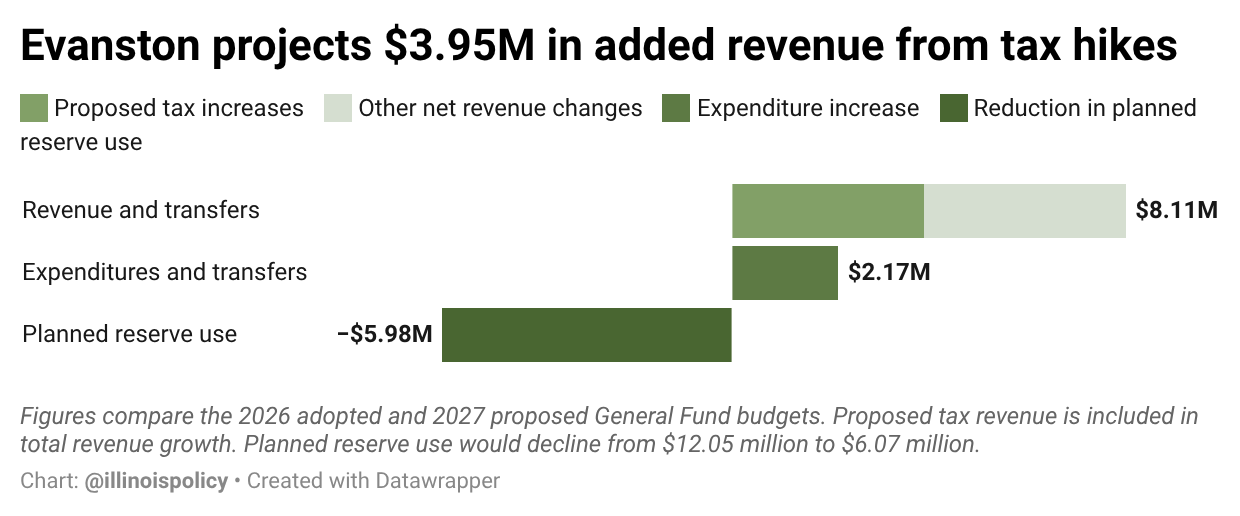
Even with those increases, the city projects a $6.1 million General Fund shortfall, which it plans to cover using reserves. The 2026 budget relied on $12.1 million in reserves to cover its General Fund deficit.
City officials citied rising personnel and pension costs as pressures on the budget. Much of the proposed property tax increase would support parks and recreations while higher water rates would help fund infrastructure improvements, including replacing aging water mains and lead service lines.
During the Oct. 12 City Council meeting, some council members questioned whether the city had sufficiently cut spending before proposing higher taxes and fees. Council members raised concerns about the costs that would fall on Evanston residents and businesses.
Illinois’ tax burden is driving people out of the state. To encourage families and businesses to move here and stay, fiscal responsibility at the local level is a good place to start.
Related: