
Illinois voters approve $1.63 billion in local bond debt
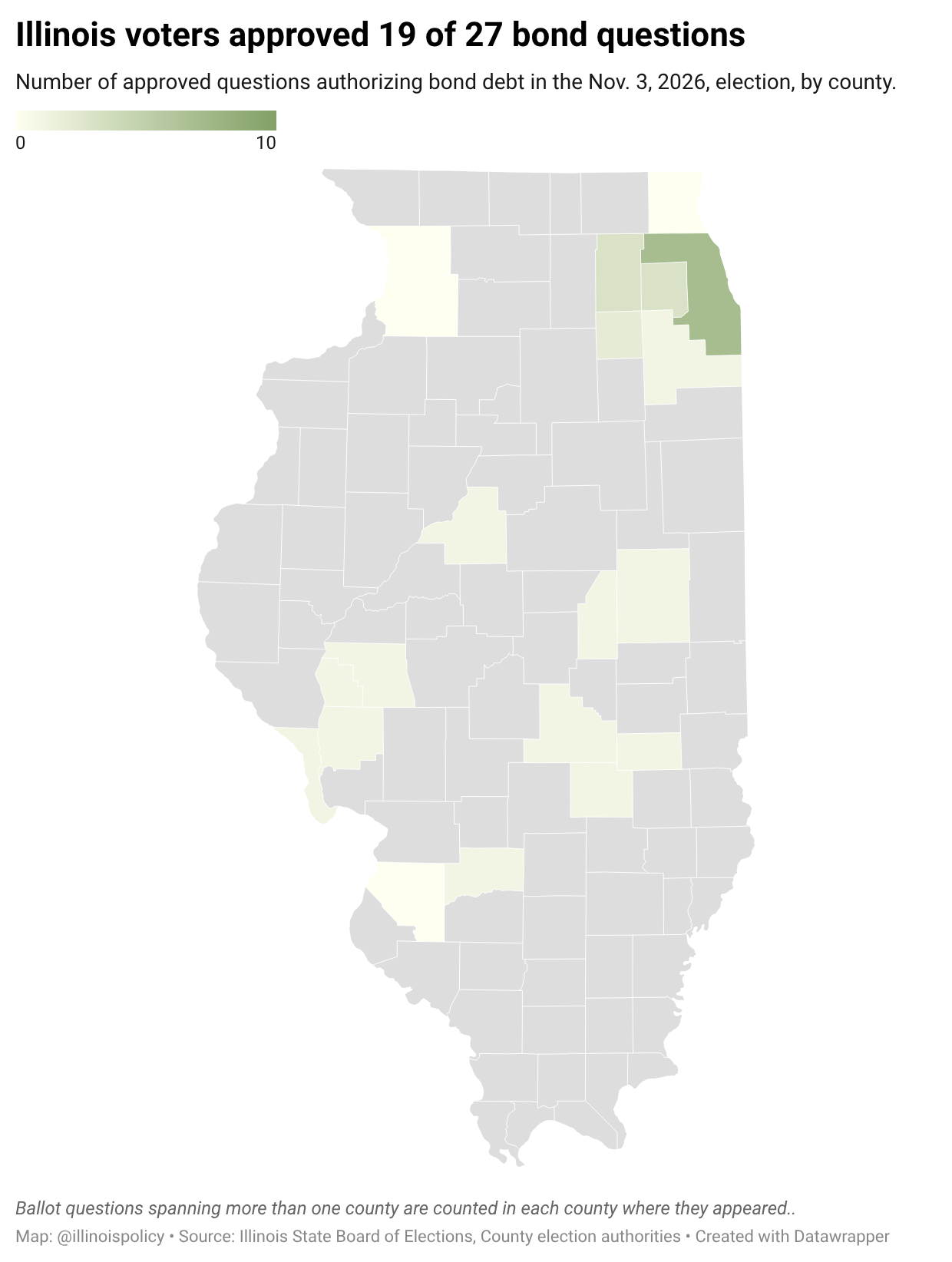
19 of 27 bond issues on ballots statewide passed.
Voters across the state were more receptive to bond issues than direct tax increases, rejecting only about a quarter of the borrowing questions that were on ballots.
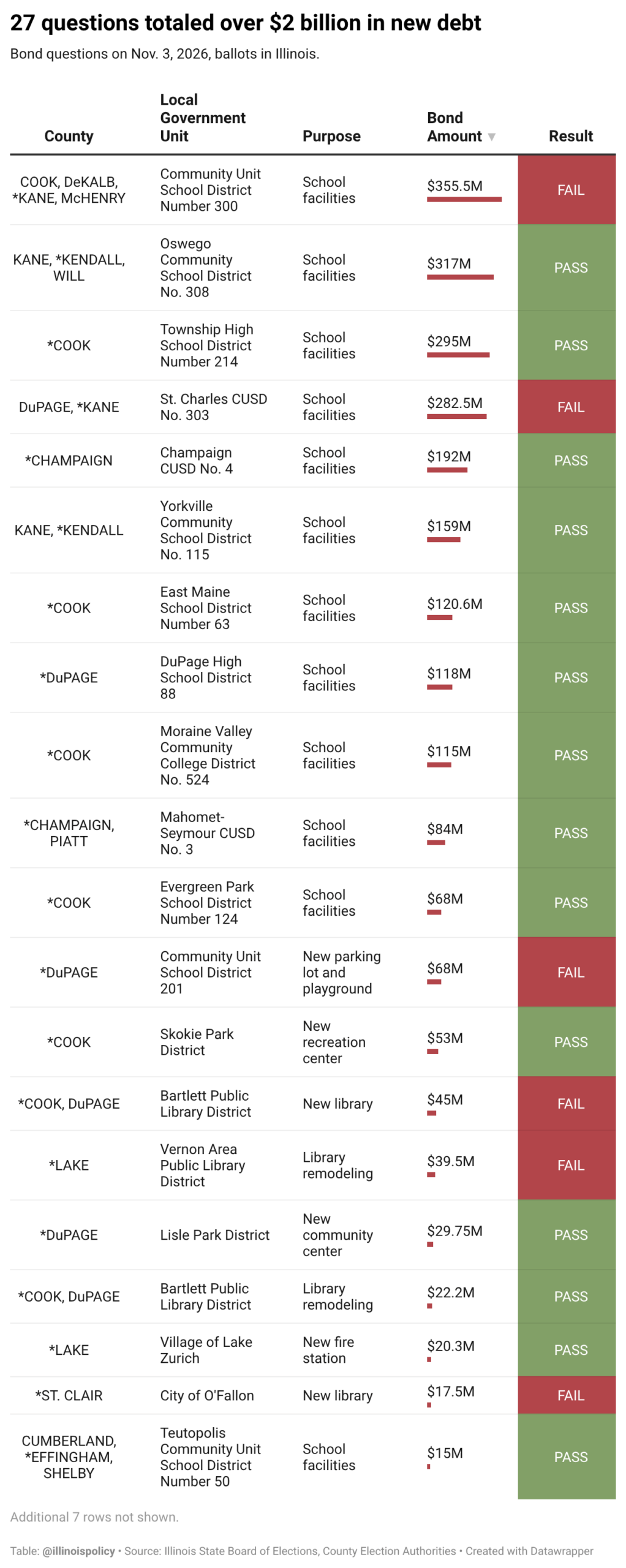
Of the 27 questions, voters said no to eight, accounting for over $800 million of the $2.4 billion in borrowing the questions represented. The 19 bond issues that won total over $1.63 billion in debt.
By contrast, voters rejected over 60% of the direct tax increases on ballots statewide.
At least 15 school districts, two library districts, two fire protection districts, two park districts, the village of Lake Zurich and Moraine Valley Community College District 524 put bond questions on the ballot, asking voters to authorize public debt in amounts ranging from around $1 million to over $350 million.
While it’s not a direct increase, bond debt leads to higher taxes for residents. That could be in the form of increased property taxes, which some districts explicitly acknowledge. For example, Carpentersville Community Unit School District 300 estimated around a $101 annual property tax increase on a $400,000 home for its failed $355 million bond question, according to the Daily Herald.
Or bond debt could prevent a tax from expiring. The debt is often secured by tax revenue dedicated to paying it. When that debt is paid off, taxing districts will often seek to direct that revenue to new bonds, classifying the new debt as “tax-neutral.” But in reality, if no new bond is issued, the revenue that had been dedicated to the now paid-off debt could be returned to taxpayers.
Illinoisans pay some of the highest combined state and local taxes in the country, and polling shows they have had enough. Voters may have more patience for bond debt, but that may not last for long unless the state and local governments find a way to provide taxpayers relief.