Late fees almost half of Chicago’s red-light camera revenue in 2025
The city collected $47.1 million from the cameras last year.
Almost half of Chicago’s revenue from red-light cameras last year came from late penalties for unpaid tickets.
The city collected $47.1 million from those camera violations last year, with $22.3 million coming from late fees.
Late fees double the cost to a driver: The initial ticket is $100 and failing to pay on time (within 21 days) adds another $100.
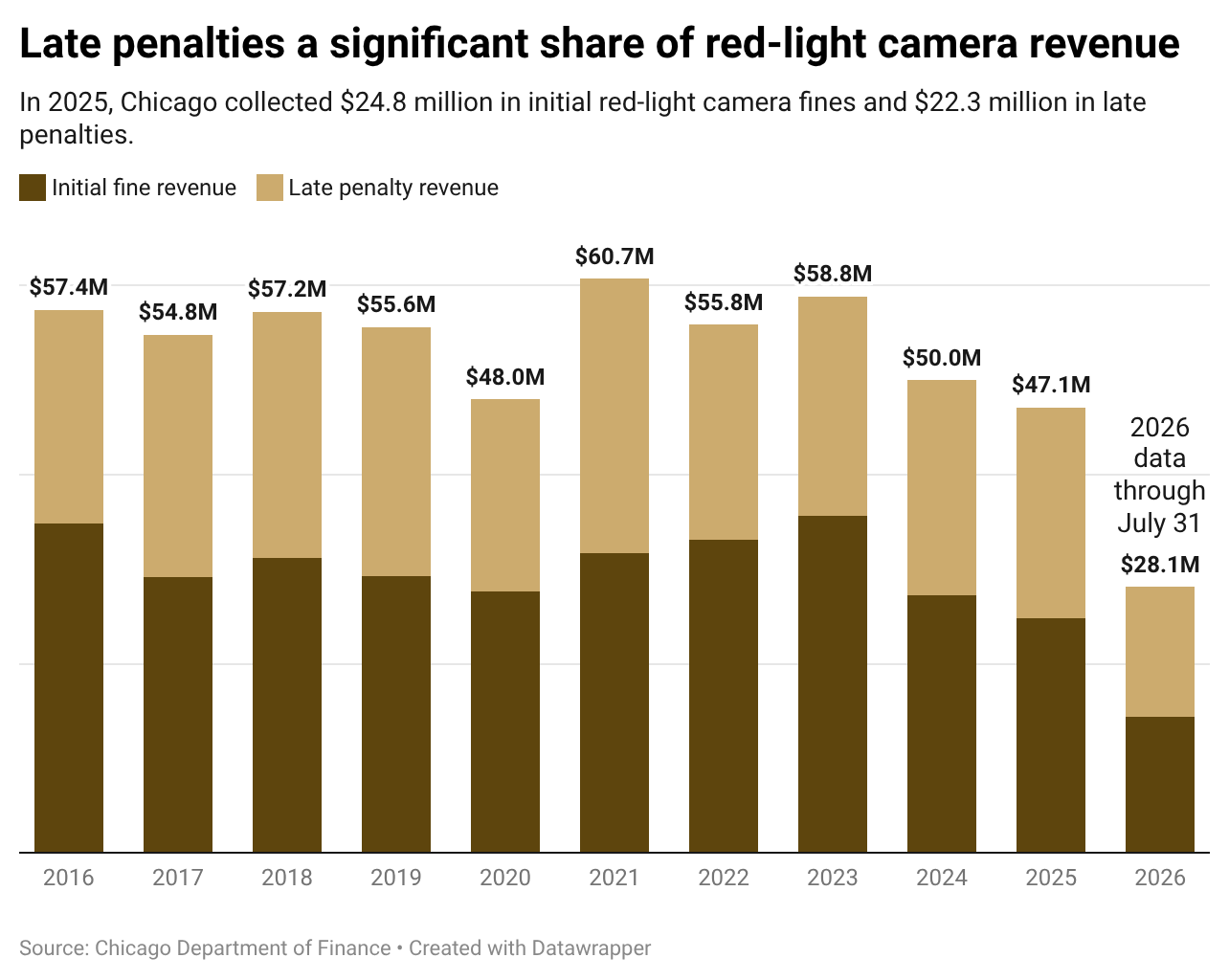
Overall revenue from red-light camera tickets has fallen in the past decade, but late fees have remained a substantial part of the amount. From 2016 to 2025, revenue from initial tickets fall 29% while revenue from late penalties fell much less — only 1.5%.
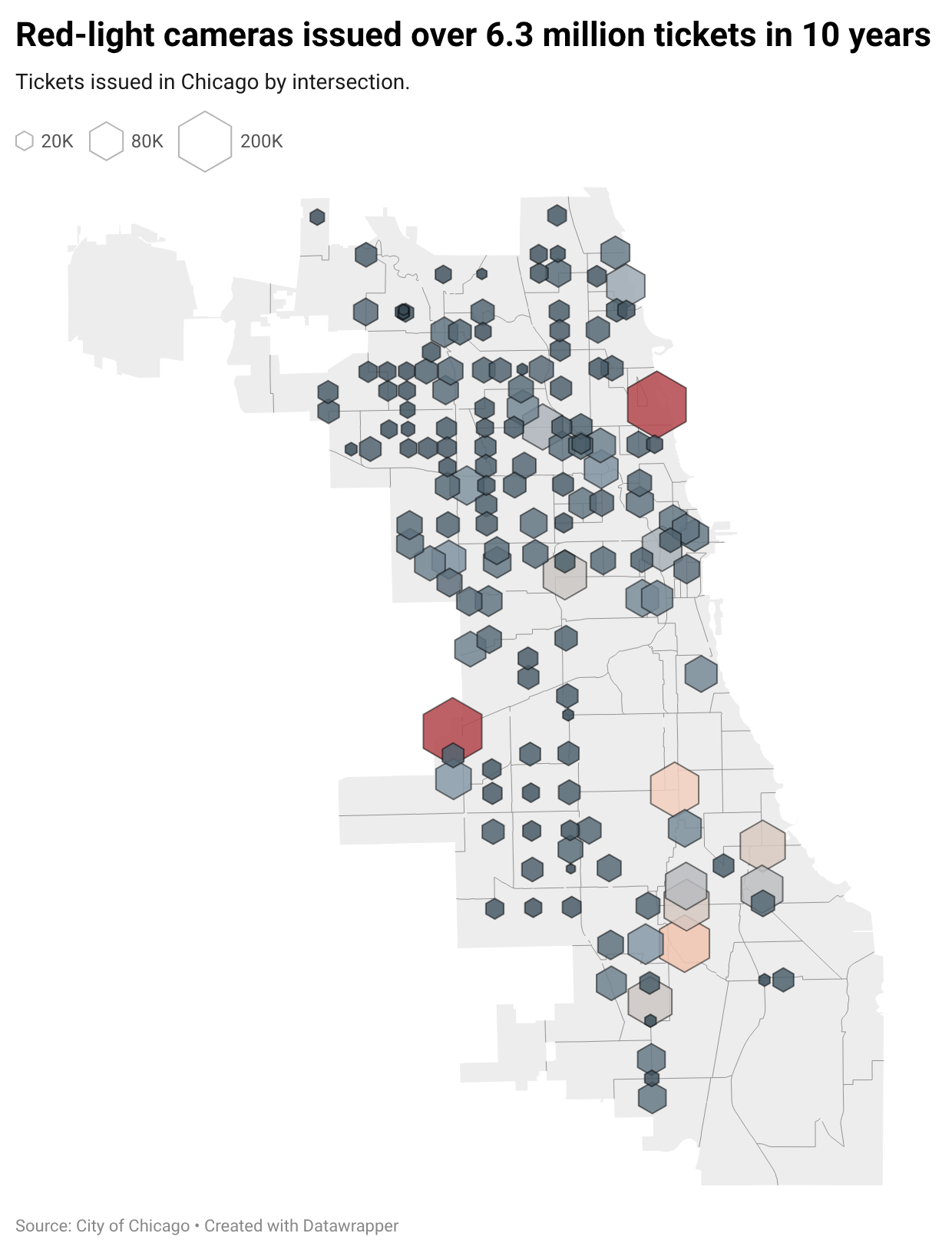
From Jan. 1, 2016, through July 31, 2026, Chicago collected $573.5 million from red-light cameras, issuing 6,357,916 tickets.
In that time, drivers were issued the most tickets at Cicero Avenue and Interstate 55 on the Southwest Side and DuSable Lake Shore Drive and Belmont on the North Side, with those two intersections accounting for 8% of total tickets issued.
Chicago has red-light cameras at 149 intersections and has not added one since February 2018. But the city expanded its other automated enforcement program, adding 50 speed cameras in 2025 after three consecutive years of declining speed-camera revenue.
Speed camera revenue rose from $59.6 million to $64.2 million in 2025. The rise was significantly less than the $11.4 million Johnson administration.
Relying on cameras for revenue can conflict with their stated purpose: improving traffic safety, especially when perhaps a lot of the revenue is coming from people who cannot pay right away and are issued late fees.
University of Illinois-Chicago researchers found there was “little relationship between the number of tickets issued and the safety impact of (red-light and speed) cameras.”
The city’s reliance on unpredictable funds has created a revenue problem.
Chicago already faces persistent budget challenges because of an age-old tradition of balancing the budget by nickel-and-diming residents. Doing so with red-light cameras is poor policy relying on residents being ticketed and failing to pay them on time.