
Even after upgrades, Illinois’ credit rating is still worst in the nation
The ongoing pension crisis is a big part of it.
Despite two recent upgrades, Illinois’ credit rating remains the worst in the country, with a couple key issues holding the state back.
Moody’s Ratings raised the state to A1 from A2, and S&P Global Ratings elevated Illinois to A from A-. The ratings are based on a government’s ability and willingness to pay back debt principal and interest on time.
The agencies said significant headwinds remain in Illinois, including sluggish economic and population growth and the state’s unfunded pension liabilities.
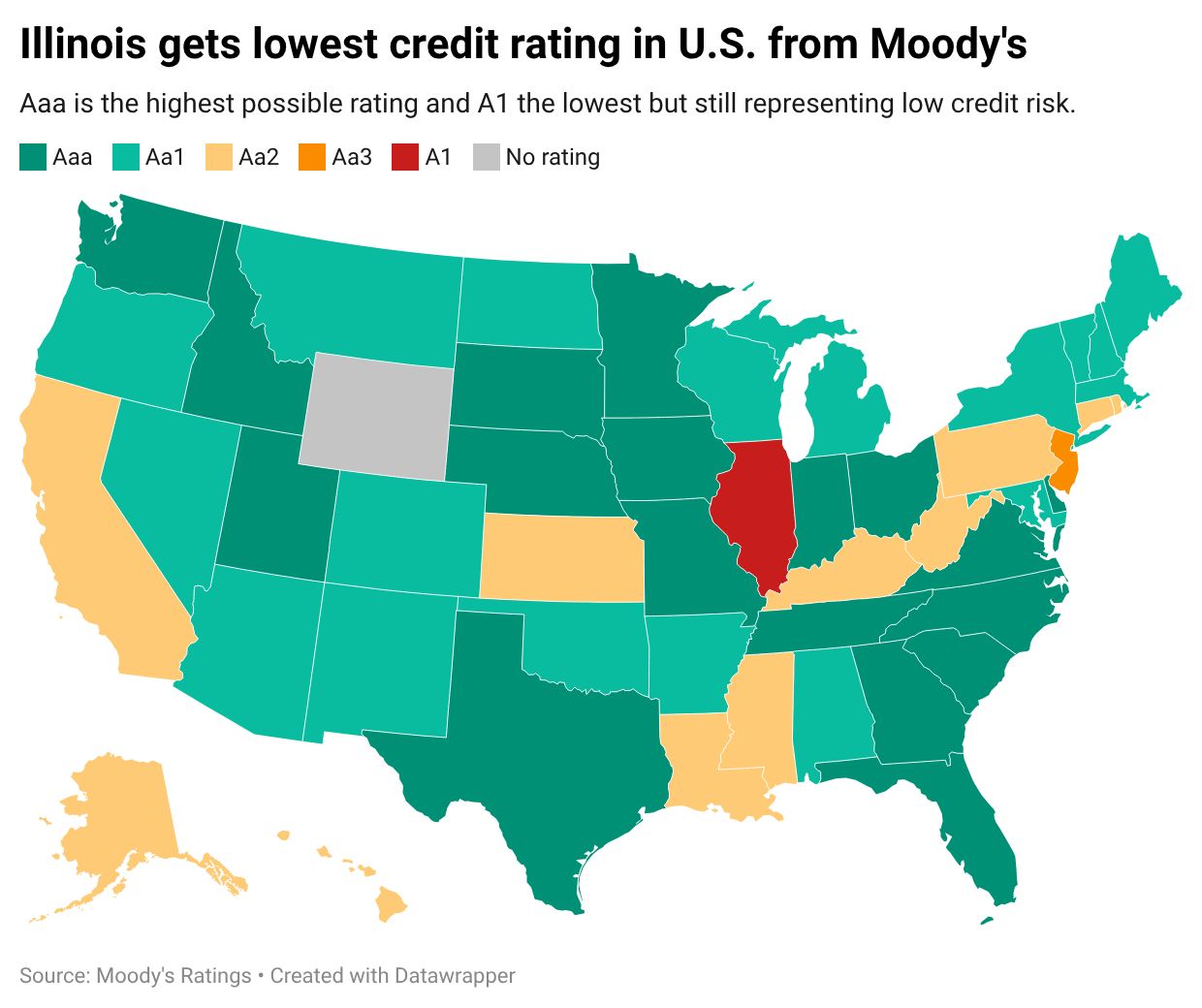
A higher credit rating enables a state to borrow or roll over existing debt at lower interest rates. A lower rating creates more risk for investors, who will demand higher interest payments.
Illinois’ worst-in-the-nation credit rating hurts taxpayers. A Charles Schwab report from shortly before the ratings upgrades using Bloomberg data showed that Illinois’ 10-year bond yields are 62 basis points, or 0.62%, higher than bonds issued under a “generic 10-year AAA index.”
Applying that to the $2.6 billion in general-obligation bonds Illinois plans to sell this year would mean $16.1 million more in annual interest payments than states with the highest rating. That could slightly improve given the recent upgrades.
The upgrades reflect the state’s progress in improving its fiscal standing. Since 2019, the year Gov. J.B. Pritzker took office, Moody’s has upgraded Illinois’ credit rating five times from Baa3, the lowest rating deemed investment-grade and one notch above junk status. S&P has upgraded the rating four times, from one notch above junk status, BBB-, to A. Including Fitch Ratings, the governor’s office boasts of 12 upgrades.
Moody’s identified two key factors weighing down Illinois’ credit rating: the large unfunded pension liabilities, which require increasingly higher state contributions, and Illinois’ much slower economic growth compared to the rest of the U.S., driven by residents and businesses fleeing the state, reducing the revenues Illinois has to pay its debt obligations.
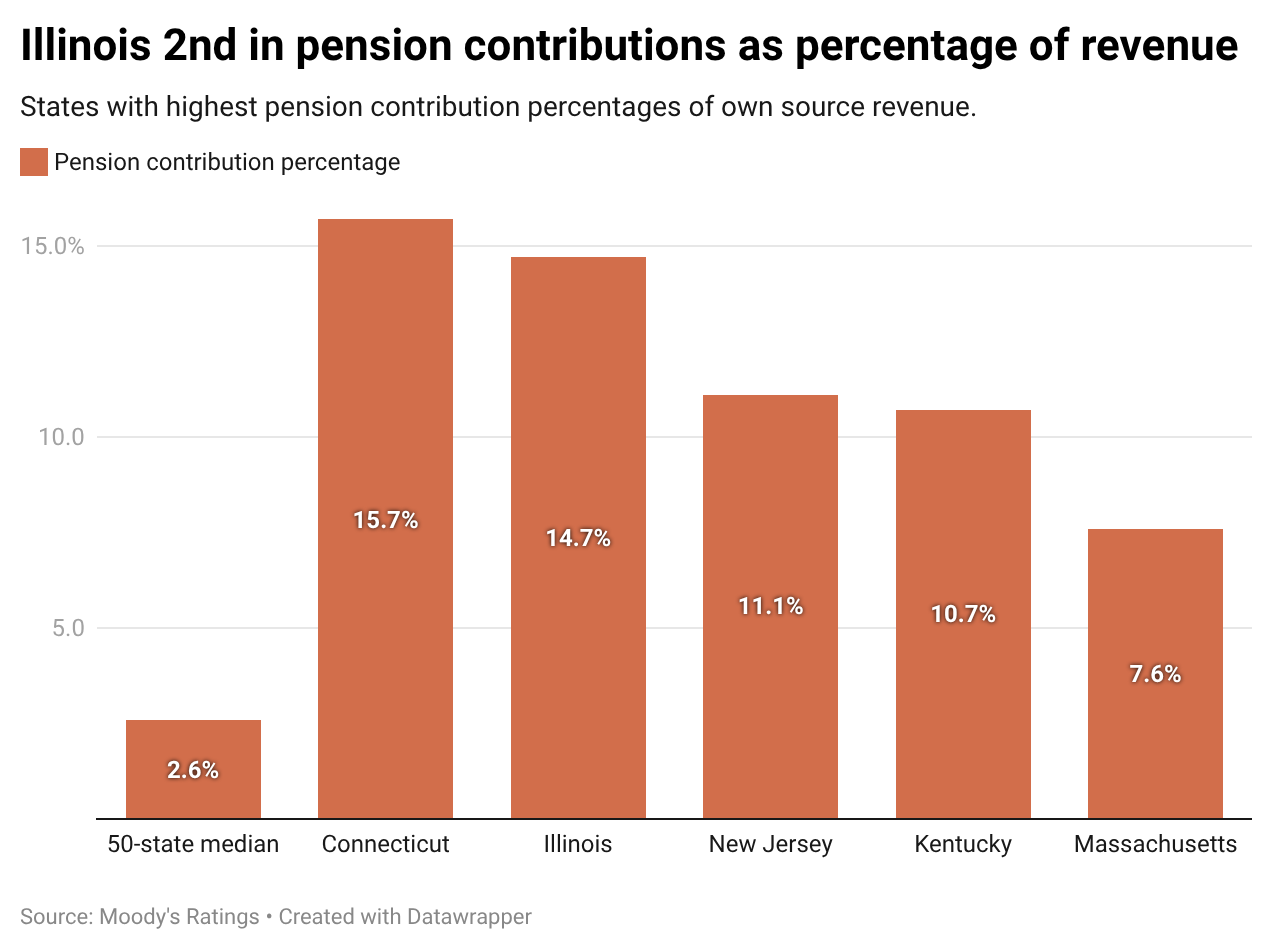
Illinois’ net unfunded pension liability stands at around $143.5 billion as of June 2025, with a funded ratio of 47.8%. That means that the state has less than half the money it needs to pay off what it owes to pensioners in the future.
Illinois relies on increasingly larger contributions. Those contributions were $11.7 billion in 2026 and will continue to rise to an estimated $18.6 billion annually by 2045. These contributions make up roughly 20% of general funds expenditures, leaving Illinois with less flexibility to make debt payments and hurting its credit rating.
Slow employment, population growth
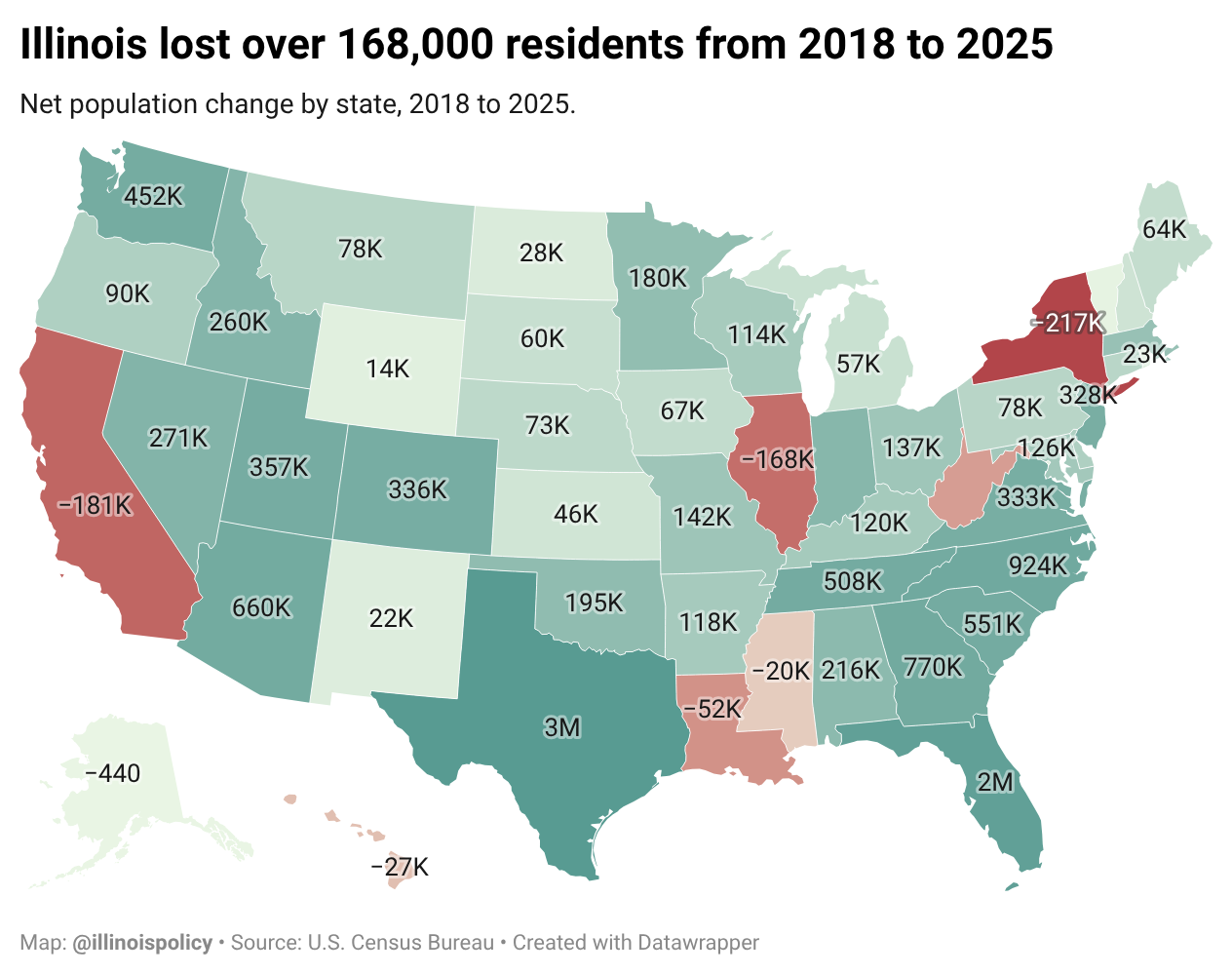
The other major cause of Illinois’ low rating that Moody’s noted: weak economic growth partially driven by sluggish population growth. “The Illinois economy, though very large and diverse, has for the past decade grown at a slower pace than most states and will likely continue to do so given its population trend,” the agency says.
Since 2018, Illinois’ population has declined by about 168,000, and its annual compounded population growth rate ranks 48th nationwide.
Employment growth in the same timeframe hasn’t been much better. From 2018 to 2025, Illinois’ net private sector job growth rate ranked 46th, growing 0.4%, compared to the national rate of 6.72%.
Recommendations to receive further upgrades
Moody’s laid out a couple of key recommendations for Illinois to continue improving its credit rating: making the requisite contributions to the pension system to prevent the unfunded liabilities from growing and ensuring that Illinois continues to have a balanced budget and grows its rainy-day savings to be better prepared for a financial downturn.
Illinois has been struggling on those. In 2025 the state was $198 million below the “tread-water” cost, or the amount it needs to contribute to prevent the unfunded pension liabilities from growing. For fiscal 2026 Illinois had the third-lowest rainy-day reserves relative to spending in the nation, enough to support about 16 days of government operations, compared to the national average of about 56 days.
To get further upgrades from the agency, S&P said, Illinois must work toward making the actuarially determined pensions contributions, the amount the state’s own actuaries determined are necessary to truly fund the system. Illinois consistently shorts these payments.