

November unemployment: lower national unemployment rate masks increased joblessness
The national unemployment rate may have dropped to 7.7 percent in November from 7.9 percent in October, but the nation is making little progress on the road to a full economic recovery. Though a decrease may seem encouraging, the reality of these numbers is not: The rate dropped because more than 350,000 people left the...
The national unemployment rate may have dropped to 7.7 percent in November from 7.9 percent in October, but the nation is making little progress on the road to a full economic recovery.
Though a decrease may seem encouraging, the reality of these numbers is not: The rate dropped because more than 350,000 people left the work force, not because of a substantial increase in jobs. Only 146,000 nonfarm payrolls were added in November, far below the 1982 post-recession monthly average of 285,500.
More than 12 million Americans are still unemployed and more than 22.5 million are underemployed, some of the highest numbers ever in a post-recession period. Such developments at the national level mean that the unemployment situation for Illinois may well go from bad to worse.
November unemployment numbers for individual states won’t be available until later this month. But if the pattern of the last few months holds, Illinois’ unemployment will remain stagnant, even as national and neighboring states’ unemployment rates drop.
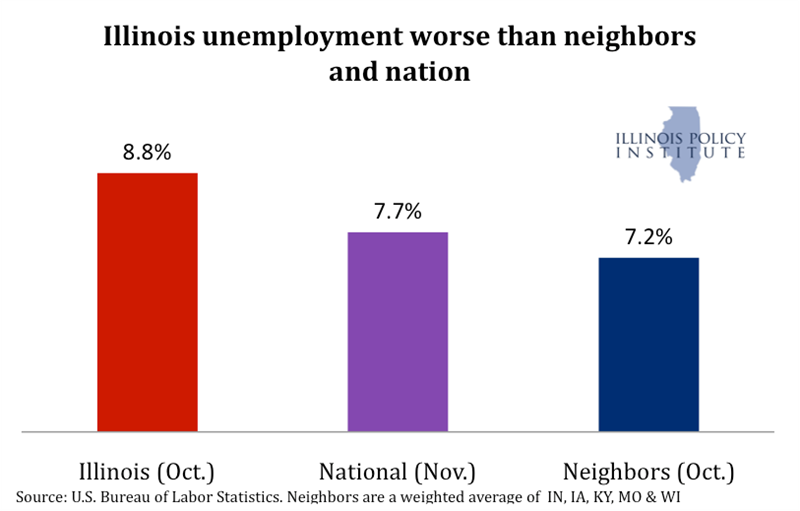
To reach the new national unemployment rate of 7.7 percent, 70,000 more Illinoisans would have to be employed. And for Illinois to reach its neighbors’ average of 7.2 percent, 93,000 more Illinoisans would have to be employed, which could take years at the state’s current rate of job creation.
That is dismal news for the 580,000 Illinoisans who are still out of work; they are the victims of a political establishment in Springfield that refuses to take any steps that could improve Illinois’ economic situation. If something is not done soon, Illinois may be left further behind while the rest of the nation continues to recover.