
Illinois tax burden up $85.6 billion under Pritzker as he enacts 63 tax and fee hikes
The past six fiscal years represent the six highest state tax burdens in Illinois in over 30 years.
Under Gov. J.B. Pritzker, the past six fiscal years represent the six highest state tax burdens in recent Illinois history.
Pritzker has enacted 63 tax and fee hikes since taking office. The tax burden under the governor increased almost $86 billion through fiscal 2026. Last fiscal year alone, Illinoisans and businesses paid $15.2 billion more in state taxes than they would have at pre-Pritzker levels.
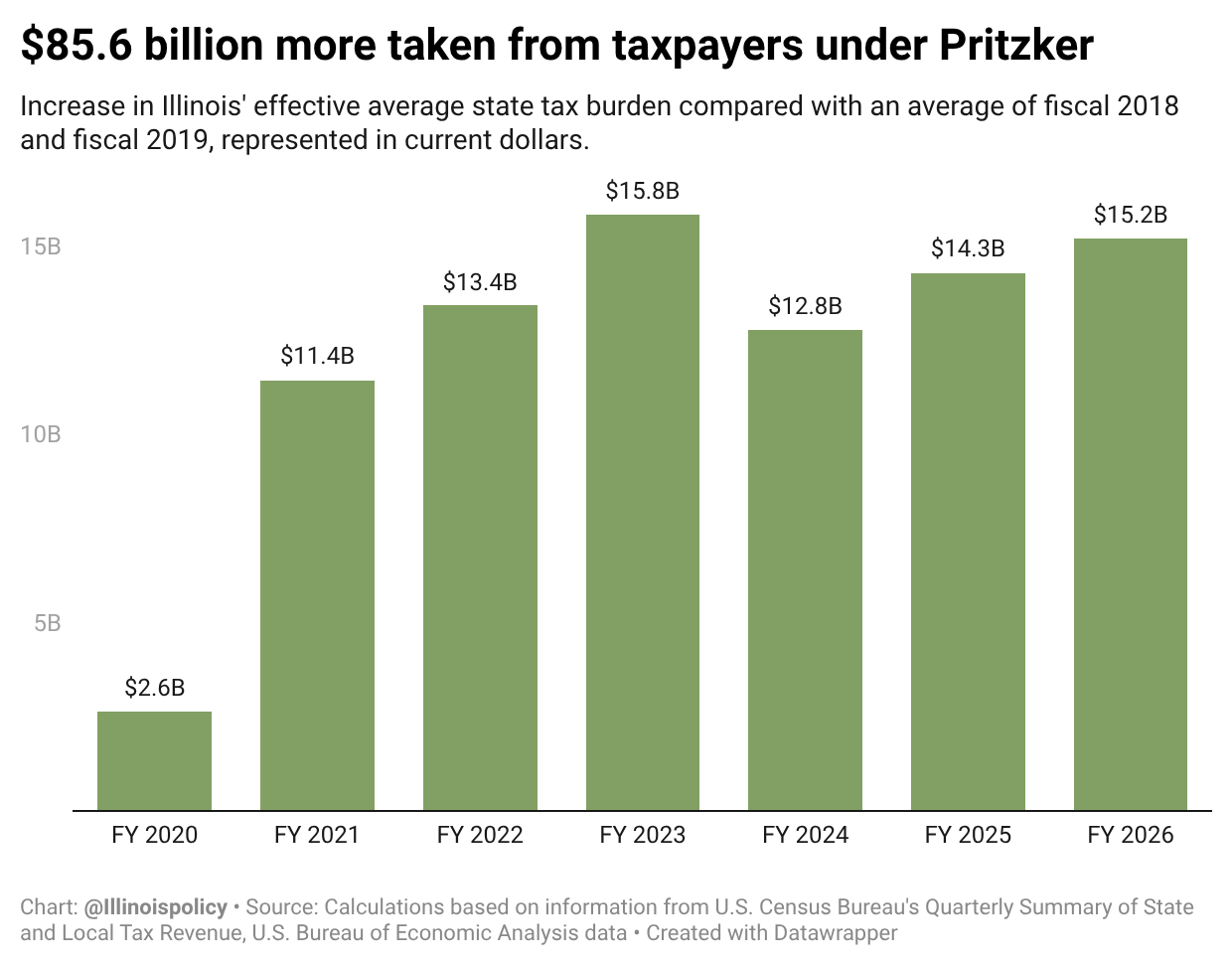
State tax collections were equivalent to 6.1% of state GDP in fiscal 2026, the third-highest state tax burden in Illinois in the past 30 years. In the 10 years before Pritzker took office, Illinois state tax collections averaged 4.8% of state GDP.
Under Pritzker, the past six fiscal years make up the six highest state tax burdens in Illinois in over 30 years.
How did Illinois end up with such a high tax burden?
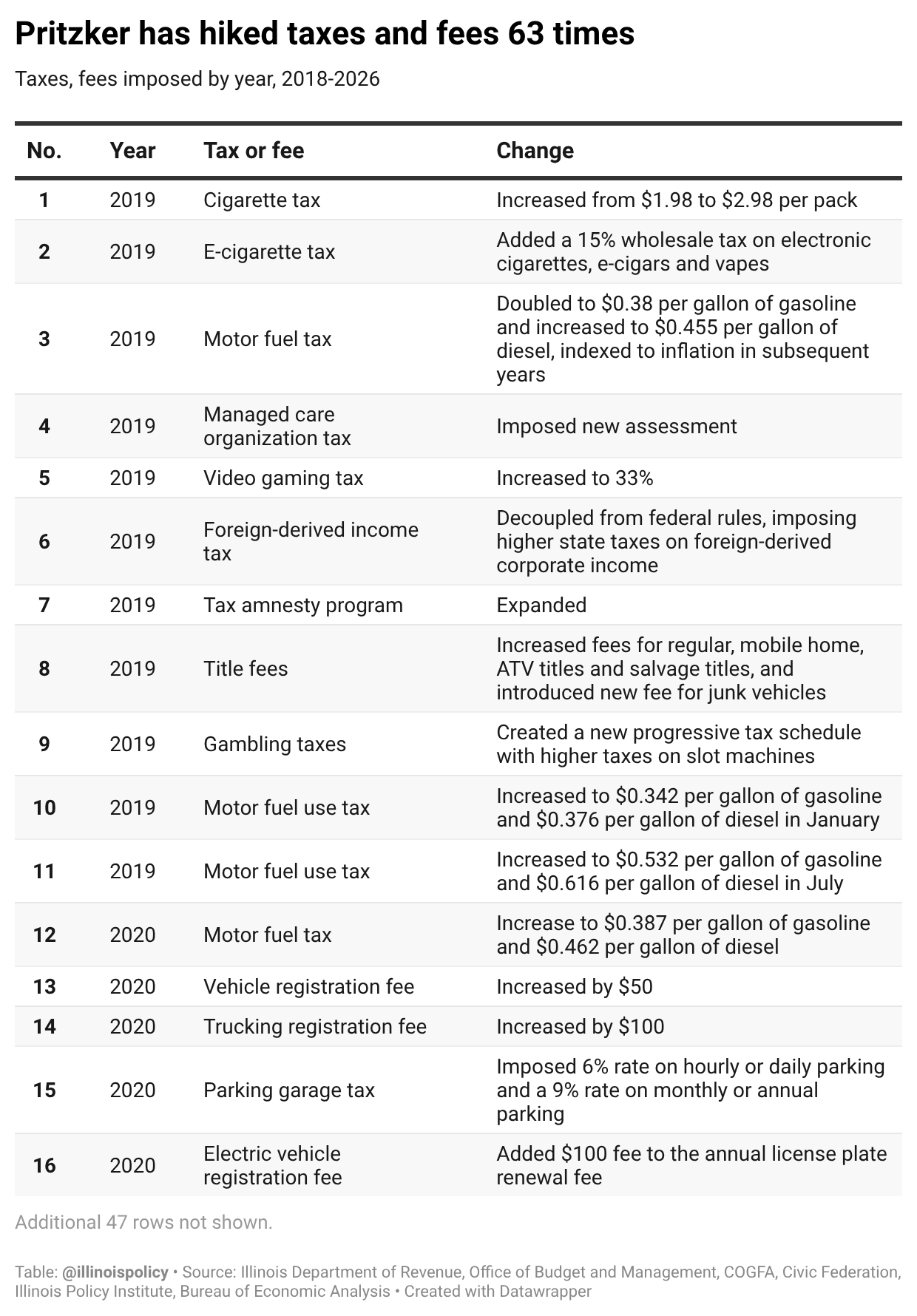
Pritzker has achieved this run by enacting 63 tax and fee hikes since 2019.
Those increases span from the beginning of his governorship, such as:
- The gas tax, which doubled in 2019 from 19 cents to 38 cents a gallon. It’s now 48.3 cents a gallon.
- The 2020 parking tax, which imposed a 6% rate on hourly, daily and weekly parking and 9% on monthly and annual parking. (There are exemptions, including government-run facilities.)
Tax increases in the most recent budget Pritzker signed include:
- A 15% tax on a “fantasy contest” operators’ net revenue.
- The estimated $300 million corporate tax hike from capping net-operating-loss deductions.
Pritzker’s financial leadership is not only costly but has induced knock-on effects at the local level. Property taxes have risen 27% under his watch. While those taxes are driven by local decisions, state policy, particularly around pension and school funding, has pressured local governments and contributed to those hikes.
Have new taxes helped the Illinois economy?
Economic signs point to no.
Under Pritzker, Illinois has performed at the bottom of the pack in key metrics, largely because of the state’s high tax burden.
- Illinois private-sector jobs grew by less than 0.1% from 2018 to 2025.
- Wages in the state grew 0% during the same period.
- Over $35 billion in personal income left Illinois during Pritzker’s first term.
The growing tax burden is a symptom of the overarching spending problem in Illinois. The state faces a mounting fiscal crisis driven by consistent overspending that is sapping economic growth and threatening Illinois’ long-term economic health.
State lawmakers can no longer tax their way out of exorbitant budget deficits without accelerating the problem of Illinoisans leaving for lower-tax states. That damages our communities, shrinks the tax base and further undermines economic competitiveness.