
What teachers unions won’t tell you about the Federal Scholarship Tax Credit
Gov. J.B. Pritzker has an opportunity to help Illinois students pay for educational resources — at no cost to the state.
Despite what teachers unions might claim, the Federal Scholarship Tax Credit program would benefit public schools.
Opting out could deny those students potential resources for their education.
Under the program, donors will receive a dollar-for-dollar federal tax credit of up to $1,700 for contributions to scholarship-granting organizations. Illinois taxpayers who donate will receive the credit whether or not Pritzker opts in, so declining to do so would only keep education money from parents and children in the state.
Pritzker, who must decide whether to opt the state into the program, should not let teachers unions or politics stand between Illinois students and academic opportunities.
Pritzker has to decide by Jan. 1, 2027. Here’s what you need to know about the program.
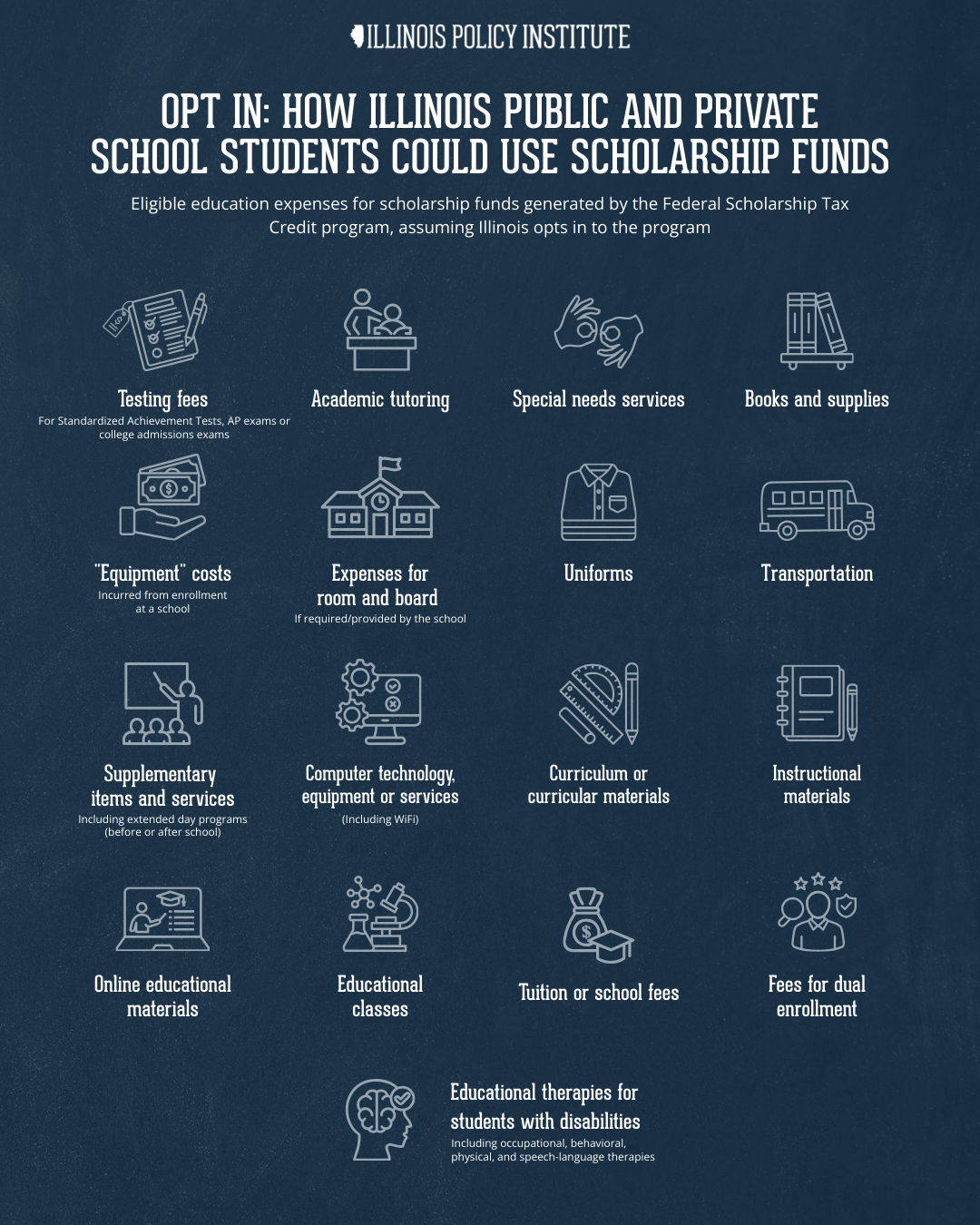
Public and private school students can benefit
The federal program can be used for a wide range of education-related expenses for any student. It could give Illinois students access to money that could help pay for tutoring, college-credit coursework, special-education services, standardized testing, classroom materials and other educational expenses.
The most recent state test scores show just over half of Illinois students were reading at grade level in spring 2025. Only 39% were proficient in math. The scholarship program offers families a way to provide the academic support their children need, whether at home, at their local public school or at a private school.
Any K-12 students are eligible for the money whose household income is at or below 300% of the median in their area.
Scholarships could help students boost college entrance exam scores
Qualifying students could use donated money for ACT tutors and study materials. The funds also could cover testing fees or retakes.
The program takes no money from public schools
The scholarships are funded by donations from taxpayers who receive a dollar-for-dollar federal income tax credit of up to $1,700 in return.
The only cost to the federal government is minimal foregone income tax revenue. There is no cost to states, only the benefit of more private support flowing directly to students.
The program provides additional resources to students with disabilities
The money can be used for educational therapies for students with disabilities.
Most students with disabilities enroll in public schools. In the 2024-2025 school year, nearly 375,000 Illinois students with disabilities attended public schools.
Under the program, if Pritzker opts in, families of these students could access money for additional educational therapies to help their children thrive in their public school.
The program has bipartisan support
Democratic New York Gov. Kathy Hochul has said she intends to opt in her state, as she is “supportive of the federal tax credit scholarship and its potential to help New York students and schools.”
Colorado Gov. Jared Polis, also a Democrat, calls opting in a no-brainer.
“The more Democratic governors learn about it, I fully expect that most will come around and participate,” Polis said. “Because from our perspective, it’s free money.”
Democrats for Education Reform has pushed for Democratic governors to participate, arguing that the program gives states a chance to deliver more resources and options for working families.
Illinois students could be left behind
The Illinois Federation of Teachers and Illinois Education Association joined dozens of teachers unions from 23 states in an open letter urging Democratic governors to reject participation in the program. The American Federation of Teachers and National Education Association amplified their state affiliates’ message in their own letter.
Opposing donated money for students just because it is mediated by the federal government will only hurt students in the states not participating.