
Chicago Teachers Union likes Brandon Johnson’s tax on sites like LinkedIn, TikTok
The social media tax in the city’s 2026 budget already faces a lawsuit.
A new social media tax in Chicago that already faces a legal challenge has the strong support of the Chicago Teachers Union.
The tax is in the city’s $16.6 billion budget for 2026. Here’s what to know:
What is the social media tax?
While Mayor Brandon Johnson’s desired head tax failed to make the final budget aldermen approved, the plan does tax sports betting, hemp products, social media, rideshares, yacht mooring and mortgage renewals for vacant buildings remained in place.
The social media tax — 50 cents per user per month after the first 100,000 users — was expected to raise $31 million for Chicago in 2026. But the city is on pace to collect $49.2 million — nearly 60% more than forecast.
Because of a pending lawsuit, the city is apparently holding money from the tax in escrow, so its intended use, mental health programs, is coming out of the corporate fund.
What platforms are being taxed?
The taxes collected have come from these 10 social media platforms:
- Meta, owner of Instagram, Facebook and Threads
- YouTube
- X
- Snap Inc., owner of Snapchat
- TikTok
- Twitch
- NextDoor
What is the legal challenge?
Seeking to overturn the tax, tech coalition NetChoice sued in mid-March, alleging that it violates their First Amendment rights. While the tax exempts “any bona fide news website, application, or platform,” no criteria distinguish those from other news sites, according to the lawsuit.
The case is pending in Cook County. If the city loses, it may have to pay back with interest the money it has collected from the tax.
Why does the Chicago Teachers Union support this tax?
The Chicago Teachers Union loudly supported Johnson’s budget proposal, including the failed head tax of $21 per employee on large companies.
The union continues to support Johnson — a former CTU organizer — and his initiatives to “tax the rich.” That includes his social media tax.

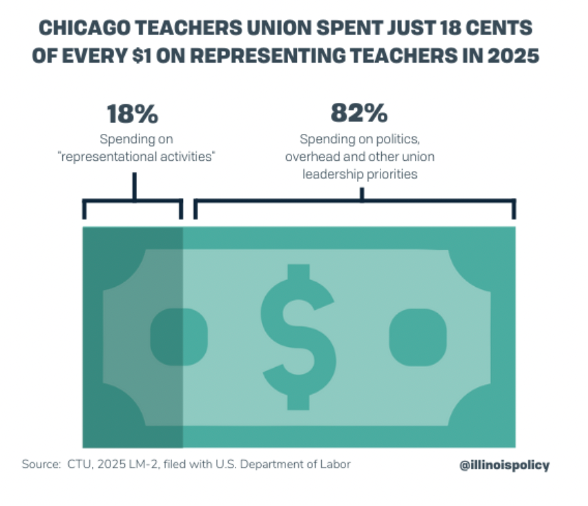
The CTU isn’t a typical union interested in teacher wages and student improvement, which is obvious from the millions it’s spent on politics and lobbying over the years. It is a political party masked as a teachers union, and it is hurting students and underrepresenting teachers. Just 18% of what it spends is on representing them.
In the meantime, its own leaders rake in six-figure incomes. And while the CTU and its president, Stacy Davis Gates, clamor for the “wealthy” to pay their “fair share,” Davis Gates has a long history of not even paying her own water bills.
If you are a CTU member and don’t want your union dues to fund its political agenda, learn about opting out at LeaveCTU.com.