
Chicago spending up $4 billion since 2019, mainly for pensions, personnel
Pension fund contributions grew more than $1.5 billion.
In his proposed budget for 2027, Chicago Mayor Brandon Johnson wants higher taxes on businesses, including a corporate head tax, to help address an $882.4 million deficit.
Johnson proposes more than $400 million in tax hikes, but Chicago doesn’t have a revenue problem. Since 2019 city spending has skyrocketed by more than $4.1 billion, or 46.5%.
In the corporate fund, the city’s main operating budget, spending is up by $2.3 billion since 2019, driven mainly by increased spending on pensions and personnel costs despite city employment falling slightly over those seven years.
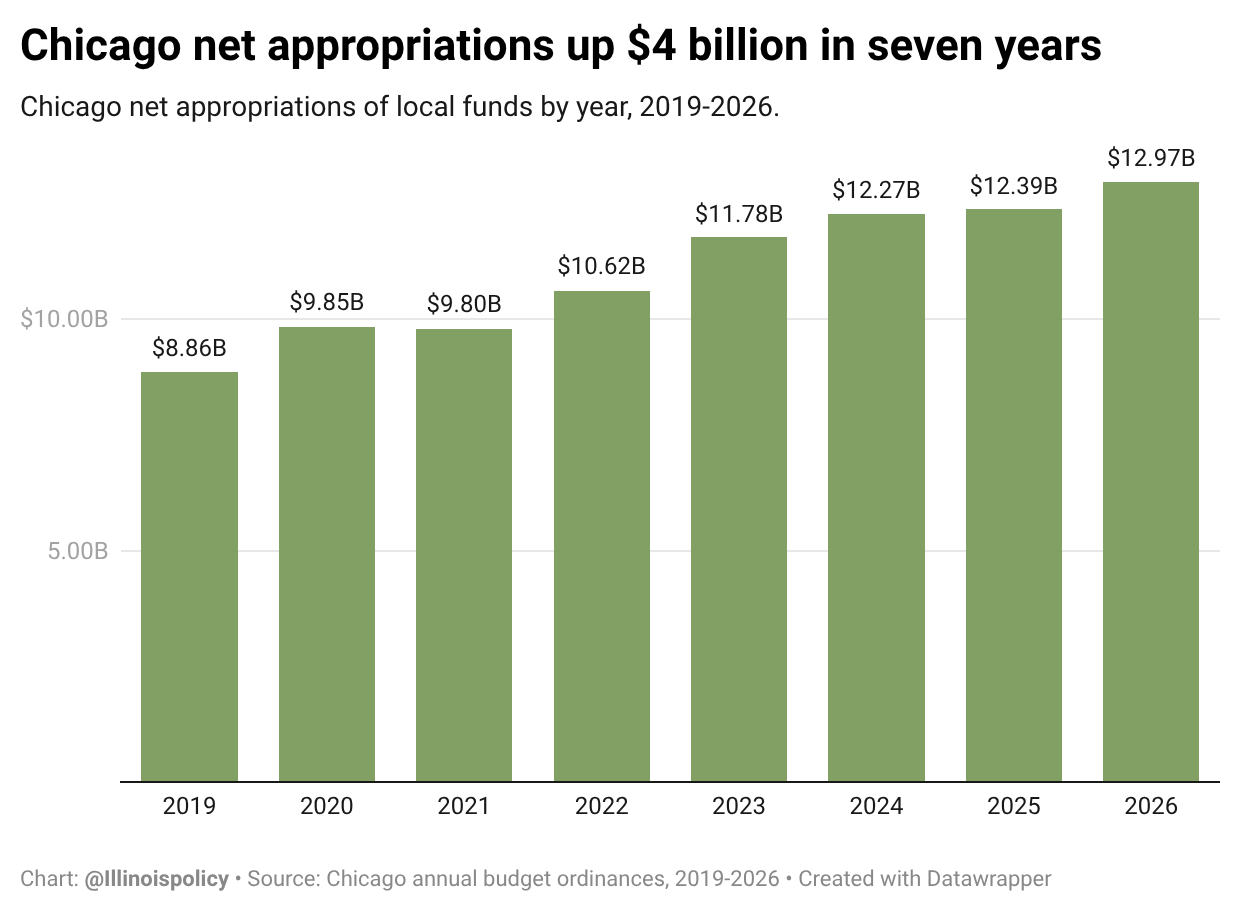
Without addressing the drivers of this spending surge, the city will not be able to rein in the budget and will continue facing budget shortfalls. Leading the way are pension and personnel costs, which together have increased by over $3 billion since 2019.
Pension spending up $1.5 billion
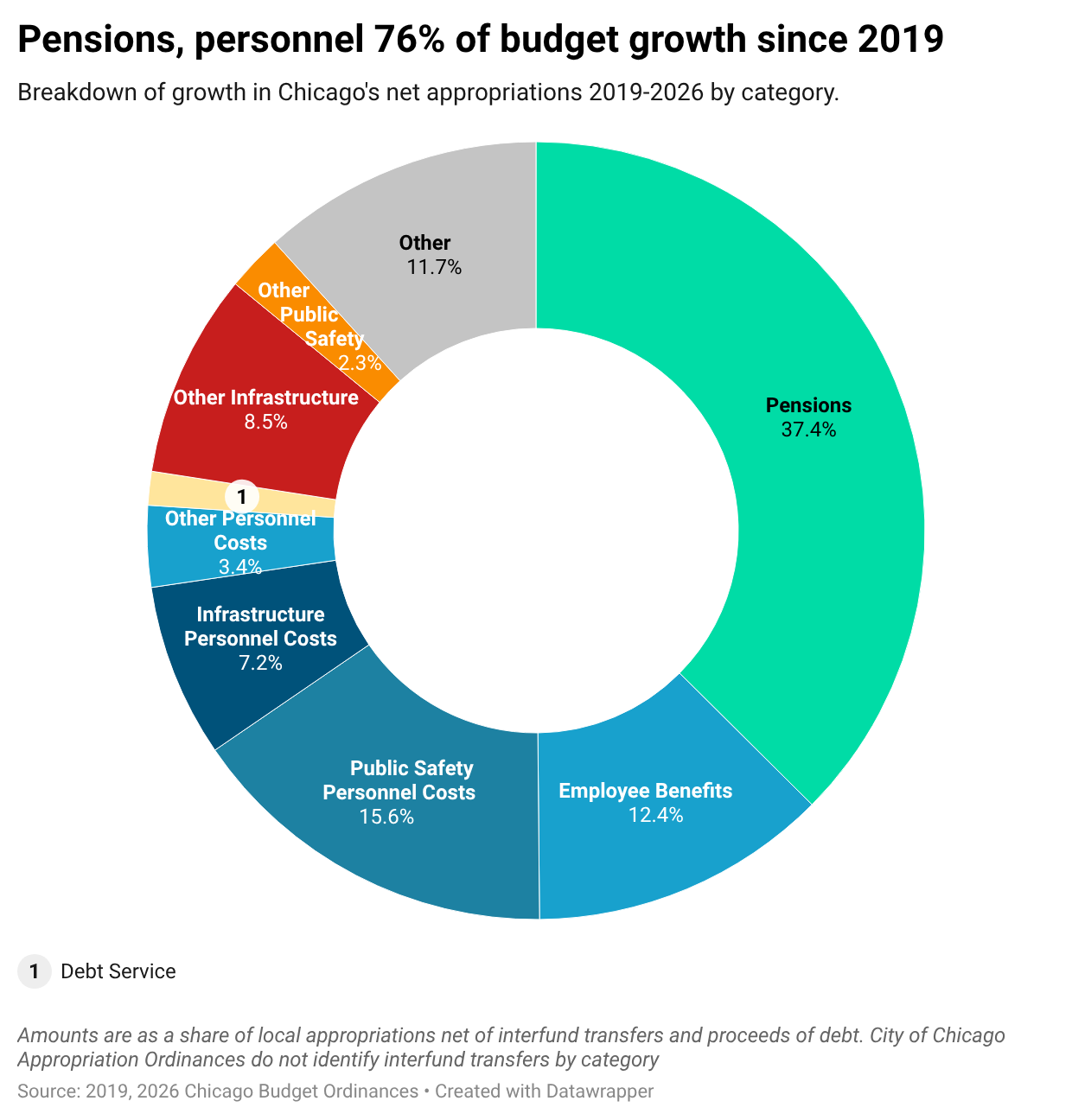
From 2019 to 2026, pension fund contributions made up the largest spending increase, growing by over $1.54 billion, or 113.4%. Over that period, Chicago more than doubled its pension contributions to address a severe pension crisis caused by years of overpromising benefits without having the money on hand to pay them.
The increased contributions are nowhere near enough to get Chicago’s pension plans to a more secure financial footing. Despite spending almost $2.9 billion on pension contributions in 2025, the city still fell $494 million short of what the plans’ actuaries determined was necessary to get them to 90% funding.
The city’s unfunded liabilities stand at over $36 billion, with its four plans at a funding ratio of only 28%. A bill Gov. J.B. Pritzker signed last year made changes to Chicago’s police and fire pension plans, a move that cost the city $300 million in the first year and is estimated to add over $11 billion in accrued liabilities by 2055.
All this has proven immensely costly to taxpayers, who pay among the nation’s highest property taxes to help bail out the city’s pension mess. More than 80% of Chicago’s property taxes go toward pension obligations.
Personnel expenditures up 38.6%
Despite the number of city employees, including vacancies, falling in 2026, non-pension personnel spending, including wages, overtime, health insurance and other benefits, surged nearly $1.59 billion. That accounted for 38.6% of the increase in Chicago’s net appropriations from 2019 to 2026.
Employee benefit spending has doubled, increasing by $511 million even though the number of city employees has not grown since 2019.
Employee headcounts are down despite growing expenses
Despite the explosion in employee costs, the city had almost 900 fewer budgeted full-time equivalents in 2026 than in 2019.
Most of the decline is in the Chicago Police Department, down 1,253 FTEs, and the Office of Emergency Management, at 1,156 lower.
The largest employee growth was in the Aviation Department, which oversees operations at O’Hare and Midway international airports. That department rose by 610 FTEs from 2019 to 2026, an increase of 33%.
The counts of budgeted FTEs include vacancies that go unfilled, masking the true number of employees on Chicago’s payroll. The city routinely budgets for filling these positions, but every year that they go unfilled, the city claims it saves money.
City-wide vacancies have risen moderately from around 3,000 in 2019 to 3,549 as of Sept. 30, 2026.
Debt service takes 15% of budget
Although debt service costs have stayed pretty consistent since 2019, they still make up a significant part of the city budget. In 2026, debt service payments cost the city $1.98 billion, or 15.2% of Chicago’s net spending. Current taxpayers are paying for previous budgets as tough decisions have been kicked down the road.
By 2029, Chicago’s outstanding long-term debt is projected to stand at over $28 billion, with the annual long-term debt service expected to climb to more than $2.5 billion.
The high taxes Chicago residents pay aren’t enough to offset the exorbitant increases in spending. A majority of aldermen have ruled out new property taxes or a corporate head tax to plug the $882.4 million deficit, instead supporting cutting unnecessary and wasteful spending and implementing recommendations to make city government more efficient.
Chicago must deal responsibly with the shortfall and pension crisis without balancing the budget on the back of taxpayers and businesses that drive the city’s economic growth.