
Despite an $882 million deficit, Johnson proposes $665 million spending increase
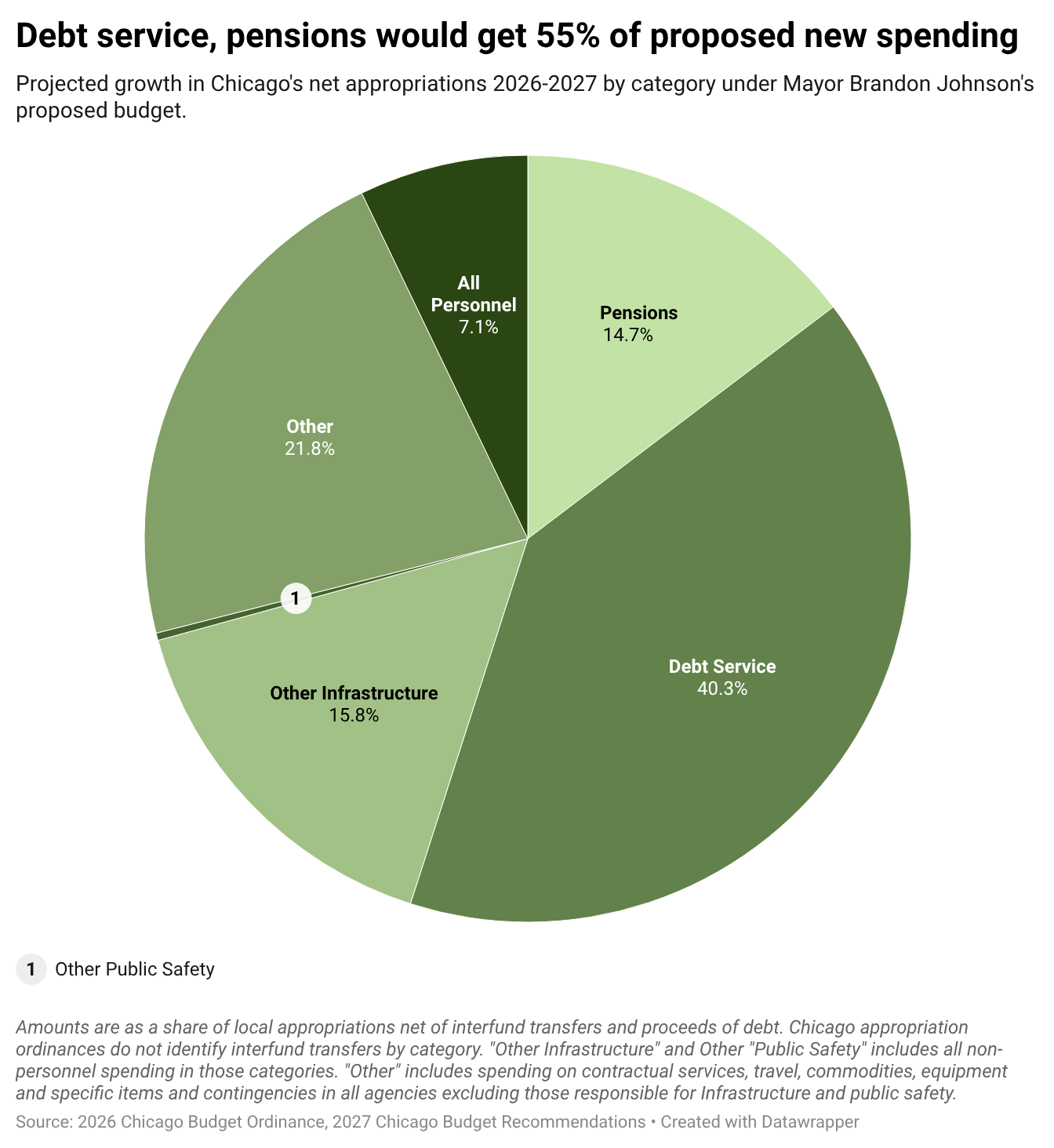
Over half of that would go to pensions and debt service.
Mayor Brandon Johnson wants to increase spending by more than $665 million next year, with over half of that going to debt service and pension contributions.
That would continue a historic trend of pensions and debt consuming much of the increases in Chicago budgets, hurting residents who are forced to pay more in taxes but don’t get more in services. Since 2019, just under 40% of new spending has gone to increases in pension contributions and debt service.
Johnson proposed the new spending despite the city facing a deficit of $882.4 million next year. The mayor wants to close that gap in part with almost $427 million in new taxes and fees.
Those include a previously rejected corporate head tax and a sharp increase in the personal property lease transaction tax including on cloud computing and software. Both proposals would make it more costly for businesses to operate in the city.
A head tax was pre-emptively rejected by 29 aldermen — a majority of the City Council — before Johnson released his budget proposal. They demanded that the mayor “reduce the recurring cost of city government before asking anyone to pay more.”
Also, 28 aldermen have now rejected the proposed 33% hike in the personal property lease transaction tax. A two-year freeze on increasing that tax was put into in last year’s budget.
In their Nov. 10 letter, those 28 aldermen also rejected any new spending increases in the budget, calling it “unfathomable” to grow spending in the middle of an $882 million budget deficit.
Over $2 billion just to service debt
The city expects to pay $2.2 billion on debt obligations next year, up more than $268 million from 2026. In Johnson’s budget proposal, that’s a whopping 16.5% of local fund spending in 2027. The city expects annual long-term debt service to climb to more than $2.5 billion by 2029.
Last year Johnson approved $1.8 billion in bonding for 2026-2027, much of it for infrastructure projects but also $450 million for retroactive firefighter pay and police misconduct settlements.
Although the city had previously anticipated it would start repaying those bonds in 2027, it structured the repayment schedule to postpone the start of principal repayment until 2029 and borrowed more money to make the initial interest payments. That also must be repaid with interest, effectively paying interest on interest.
Johnson’s proposed 2027 budget would add $481 million in borrowing to settle police misconduct lawsuits, a move his administration says will save the city money by avoiding costly litigation.
The mayor proposes borrowing that money next year and in 2028. The city estimates the interest rate for the first tranche of bonds would be 6.923%, resulting in more than $139 million in interest over the five to seven years of the bonds’ duration. The rate reflects Chicago’s low credit rating, forcing the city to pay higher interest to compensate investors for the added risk.
Borrowing money to pay for an operating cost such as legal settlements could trigger another round of credit downgrades from credit agencies, further increasing the interest rates the city has to pay when borrowing in the future.
$3 billion proposed for pension contributions
The mayor proposes almost $3 billion in pension contributions next year, another increase to address a severe pension crisis caused by years of overpromising benefits without the money to pay them.
The city’s unfunded liabilities stand at over $36 billion, with its four plans at a funding ratio of only 28%. Gov. J.B. Pritzker signed a bill last year on Chicago’s police and fire pension plans that cost the city $300 million in the first year and is estimated to add over $11 billion in accrued liabilities by 2055.
The increased contributions are nowhere near enough to get the city’s pension plans onto a more secure financial footing. Despite almost $2.9 billion on pension contributions in 2025, Chicago still fell $494 million short of what the plans’ actuaries determined was necessary to get them to the legal requirement of 90% funding by 2058.
The City Council helped a little recently by rebuffing a Johnson plan. The mayor planned to count the $75 million payment from the parking meter lease transfer deal toward the pension contributions, but aldermen voted 44-6 to make that an additional payment rather than part of the supplemental contribution.
All this has proven immensely costly to taxpayers, who pay among the nation’s highest property taxes to help bail out the city’s pension mess. In 2026, 76% of the city property tax levy went toward pension obligations.
Chicago’s residents and businesses deserve a budget that doesn’t penalize them for the financial irresponsibility of previous administrations and makes it more expensive to live and work in the city. While Johnson says wealthy corporations and the ultra-rich will pay their fair share under his proposed budget, it is regular Chicagoans who will pay the price.