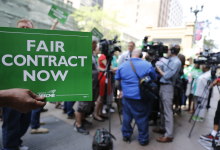
Negotiations between Illinois and AFSCME – the state’s largest government-worker union – languished for months. While AFSCME demanded contract benefits that would cost the state $3 billion in additional salary and benefit increases, Gov. Bruce Rauner offered a contract that treats state workers fairly and avoids further burdening taxpayers. On Nov. 15, the Illinois Labor Relations Board issued a decision that prevents AFSCME from obstructing progress on an agreement.

As Illinois taxpayers struggle under Obamacare’s skyrocketing health insurance costs, AFSCME has called for tax hikes to fund an additional $3 billion in pay and benefits for state workers.
An administrative law judge could issue a decision as early as Sept. 1 on whether Illinois state workers and the governor are at an impasse in contract negotiations. Here’s a rundown of the proceedings between Illinois’ largest government-worker union and the state, as well as their potential impact on residents and state employees.
Despite prior agreements with the state, Illinois’ largest government-worker union is backtracking on its promises and distorting facts in order to reach its unreasonable demands.
The governor’s office has asked the Illinois Labor Relations Board to allow the impasse proceedings between the state and AFSCME to go straight to the five-member labor board instead of first waiting for a decision from the administrative law judge.
Illinois AFSCME workers enjoy yearly wages of nearly $60,000 when adjusted for cost of living, in addition to Cadillac health care benefits. Most Illinois state workers will also get free health insurance when they retire, and career state retirees receive $1.6 million in pension benefits on average.
The testimony of the American Federation of State, County and Municipal Employees before the Illinois Labor Relations Board and the union’s refusal to compromise on any contract provisions reveal that AFSCME and Gov. Bruce Rauner have reached impasse.
Chicago’s $1.15 billion projected budget gap is the latest in a decades-long string of structural deficits. Making Chicago’s high taxes worse is not the solution.